
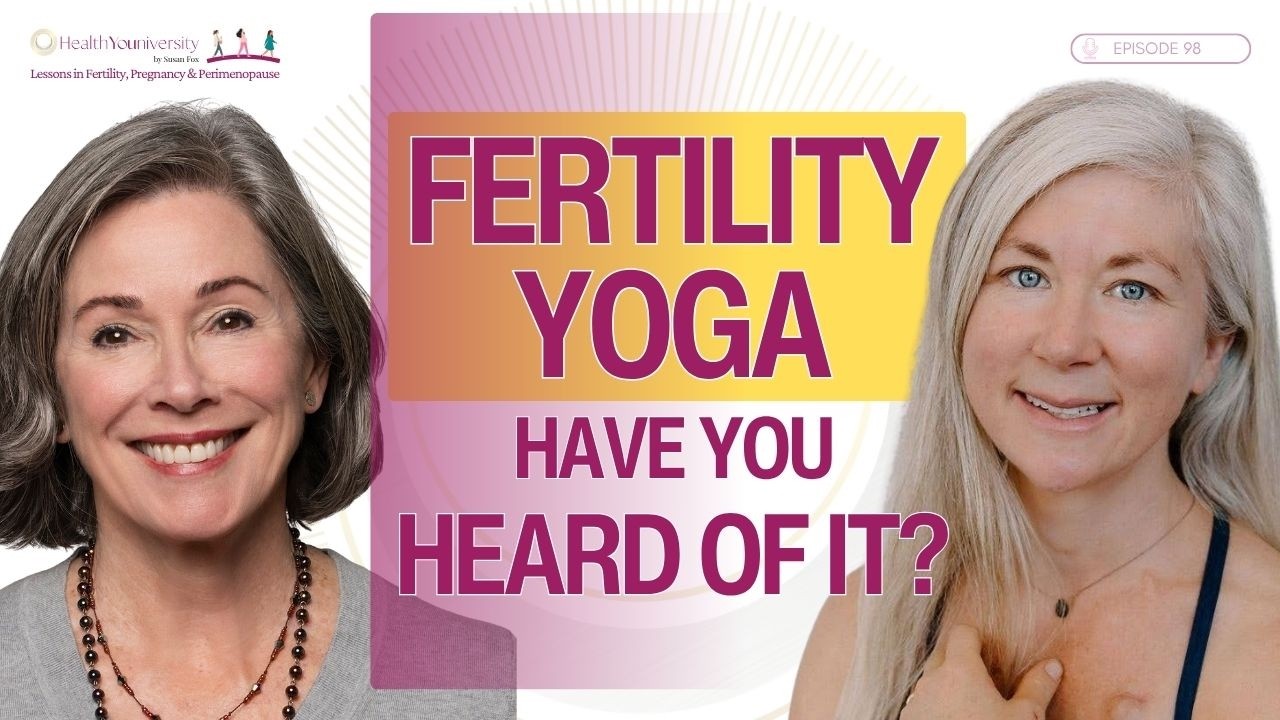
Fertility Yoga and Nervous System Regulation for a Healthy Internal Terrain
Key Takeaways
Fertility yoga is a gentle, fertility-focused movement practice intended to support circulation, relaxation, breathing, body awareness, and nervous-system regulation during the reproductive journey.
Stress regulation is an important part of whole-body fertility support. The article focuses on reducing prolonged fight-or-flight activation through breath, gentle movement, pelvic-floor relaxation, and restorative practices.
Reproductive health exists on a continuum. Fertility, pregnancy, postpartum, and perimenopause involve changing hormone patterns, making whole-body health relevant beyond the goal of conception alone.
Fertility yoga can complement medical fertility care but should not replace it. Women can practice appropriate movement and nervous-system support while also pursuing IUI, IVF, fertility testing, or other medical treatment.
The goal is not perfect fertility behavior. The article emphasizes rebuilding trust in the body, using movement to support emotional resilience, and creating a more compassionate relationship with the fertility process.
Can fertility yoga improve reproductive health? Fertility-focused yoga may support stress management, body awareness, gentle movement, and emotional well-being during the fertility journey. The article emphasizes restorative practices such as Legs Up the Wall and diaphragmatic breathing while encouraging women to use yoga alongside—not instead of—appropriate fertility testing and medical treatment. Current fertility care is best approached through a combination of medical guidance and supportive whole-body practices rather than expecting yoga alone to produce pregnancy.
April is National Infertility Awareness Month, a time dedicated to acknowledging the one in five individuals navigating fertility challenges. While medical interventions like IUI and IVF play an important role, this episode explores another powerful layer of support: fertility yoga and nervous system regulation.
Fertility is not isolated to the reproductive organs alone. It reflects the health of the entire system — hormonal balance, immune resilience, stress regulation, circulation, and emotional well-being. When we improve our whole health, we improve our reproductive health.
The Hormonal Bridge Across a Woman’s Life
Reproductive health exists on a continuum — from the onset of menstruation through pregnancy, postpartum, and into perimenopause.
Estrogen, progesterone, and testosterone rise and fall across these phases. Pregnancy brings very high estrogen levels, followed by a dramatic postpartum drop. If menstruation has not yet returned, a woman may temporarily exist in a menopausal-like hormonal state. Later, perimenopause introduces further fluctuations.
Supporting hormonal balance during fertility does more than help conception. It lays the groundwork for smoother postpartum recovery and a more supported transition into perimenopause.
Improving the internal terrain now benefits every future stage.
What Is Fertility Yoga?
Fertility yoga is not simply stretching or relaxation. It is a structured practice designed to:
Increase blood flow to reproductive organs
Create space within the pelvis
Support hormonal axis regulation
Calm and retrain the nervous system
Build stress resiliency
One foundational posture often used is Legs Up the Wall (Viparita Karani). Practiced for several minutes with one hand over the heart and one hand over the lower belly, this pose:
Enhances circulation to the pelvis
Reverses blood flow gently
Calms the central nervous system
Encourages the heart–womb connection
For those who have recently undergone egg retrieval, a gentler option such as Supta Baddha Konasana (reclined bound angle pose) may be more appropriate until the ovaries settle.
The intention is always to create safety, spaciousness, and nourishment..
The Nervous System and Fertility
Stress is often misunderstood in fertility conversations.
Cortisol and adrenaline are not inherently harmful. In fact, healthy morning cortisol (the cortisol awakening response) is necessary to rise and engage with the day. This is called hormetic stress or productive stress.
The challenge arises when stress remains elevated all day.
Modern stressors — emails, news alerts, constant notifications — activate the same fight-or-flight response that once protected us from physical danger. The body cannot distinguish between a perceived threat and a real one.
When stress remains high:
Blood flow shifts away from digestion and reproduction
Muscles tighten (psoas, pelvic floor, diaphragm)
The nervous system becomes dysregulated
Hormonal balance becomes harder to maintain
Fertility yoga works from the bottom up. Instead of trying to “think” our way out of stress, we:
Release tight muscles
Regulate breath
Improve vagal tone
Create physical signals of safety
When the body feels safe, healing and reproductive function are more accessible.
Breath, the Diaphragm, and Hormonal Support
The diaphragm plays a foundational role in fertility and immune health.
Every inhale and exhale:
Stimulates the vagus nerve
Massages the thoracic duct (critical for lymphatic drainage)
Supports detoxification
Helps regulate cortisol
Improves blood flow to reproductive organs
The diaphragm and pelvic floor work in synergy. When one is tight or dysregulated, the other is too. Chronic stress can cause gripping in the pelvic floor, reducing circulation and creating constriction..
Intentional diaphragmatic breathing supports hormone balance and improves the internal terrain, including that necessary for conception.
Rebuilding Trust in the Body
One of the most powerful themes in this episode is rebuilding trust.
When facing infertility or medical diagnoses, it is common to feel that the body has failed. This internal dialogue can create further tension and disconnection.
Yoga philosophy introduces the concept of ahimsa — nonviolence. Applied inwardly, this becomes nonviolent communication with ourselves.
Instead of:
“My body is betraying me.”
We shift toward:
“How can I support you?”
This subtle shift creates safety within the nervous system and fosters partnership with the body.
Community as Medicine
Infertility can feel isolating. Practicing within a supportive container offers something medicine alone cannot — shared experience and understanding.
Being in community reduces stress hormones, increases oxytocin, and creates emotional resilience. Whether in person or virtually, being witnessed by others on a similar path can profoundly impact mental and physiological well-being.
A Simple Daily Fertility Practice
If you take one practice from this episode, let it be this:
Legs Up the Wall with Heart–Womb Connection
Lie on your back with legs extended up a wall
Place one hand over your heart and one over your lower abdomen
Relax the jaw and pelvic floor
Take slow diaphragmatic breaths for 2–5 minutes
Cultivate feelings of safety, abundance, and gratitude
If legs up the wall is not appropriate, a reclined bound angle pose offers a gentle alternative.
Integrating Western and Complementary Care
Medical interventions and holistic practices are not mutually exclusive. Fertility yoga can help make medical treatments more effective.
We can - and should - pursue IVF, IUI, or other treatments while simultaneously:
Support the nervous system
Enhance circulation
Regulate stress hormones
Strengthen immune resilience
Cultivate internal safety
Whole-person care improves outcomes across the fertility journey and beyond.
Fertile health requires tuning the entire symphony of the body — nervous system, hormones, immune function, emotional regulation, and emotional wellness. When we create safety within, we create space for life to flourish.
If this conversation resonated, share it with someone navigating fertility. With one in five individuals affected, awareness and support matter.
Frequently Asked Questions - FAQs
What is fertility yoga?
Fertility yoga is a gentle movement and breathing practice adapted to the reproductive journey.
The article describes it as focusing on pelvic awareness, restorative movement, breathing, relaxation, circulation, nervous-system regulation, and rebuilding connection with the body rather than exercise intensity.
Is fertility yoga different from regular yoga?
Yes, in the context of this article.
Fertility yoga is structured around the needs of women who are trying to conceive or undergoing fertility treatment, with greater emphasis on restorative poses, pelvic relaxation, breathing, stress support, and modifications during treatment.
Can fertility yoga increase fertility?
The article discusses fertility yoga as supportive whole-body care, but it does not establish that yoga itself increases pregnancy or live-birth rates.
It is better positioned as a complementary practice for movement, stress management, emotional support, and body awareness alongside appropriate medical fertility care.
Can fertility yoga help with stress while trying to conceive?
It may be useful as a stress-management practice.
The article emphasizes slow breathing, restorative movement, releasing muscular tension, and creating physical signals of safety as ways of supporting women who feel chronically activated during infertility or fertility treatment.
Does stress cause infertility?
The article does not establish stress as a single cause of infertility.
Stress is better understood as one part of the broader fertility experience. Infertility itself can create significant emotional and physiological stress, and supporting the nervous system may improve well-being even when medical factors still require evaluation or treatment.
What is the difference between healthy stress and chronic stress?
The article explains that cortisol and adrenaline are not inherently harmful. Short-term stress responses help us wake up, respond, and adapt.
The concern is prolonged activation throughout the day without sufficient opportunities for recovery and relaxation.
What is the nervous system's role in fertility yoga?
Fertility yoga is presented as a bottom-up way of influencing how the body experiences stress.
Rather than relying only on positive thinking, the practice uses movement, breathing, muscle relaxation, and restorative positions to help create a calmer physical state.
What is diaphragmatic breathing?
Diaphragmatic breathing involves allowing the diaphragm to move more fully with each inhale and exhale rather than relying primarily on shallow upper-chest breathing.
The article combines this breathing style with pelvic-floor relaxation and restorative yoga practices.
How are the diaphragm and pelvic floor connected?
The article describes the diaphragm and pelvic floor as moving together during breathing.
Chronic stress may be accompanied by muscular gripping or tension, so improving breathing awareness may help women notice and release unnecessary tension through the abdomen and pelvic floor.
What is Legs Up the Wall?
Legs Up the Wall, or Viparita Karani, is a restorative yoga pose where a person lies on the floor with the legs supported vertically against a wall.
The article recommends pairing it with relaxed breathing and placing one hand over the heart and another over the lower abdomen for approximately two to five minutes.
How long should I practice Legs Up the Wall?
The simple practice described in the article recommends approximately two to five minutes while breathing slowly and allowing the jaw, abdomen, and pelvic floor to relax.
Comfort should guide the practice.
Can I practice Legs Up the Wall during IVF?
Exercise and yoga recommendations can change throughout an IVF cycle.
During ovarian stimulation and following retrieval, enlarged ovaries may require restrictions on twisting, high-impact movement, heavy lifting, or certain positions. Health Youniversity's IVF preparation guide specifically recommends following clinic activity guidance as treatment progresses.
What yoga pose can be used after egg retrieval?
The article suggests Supta Baddha Konasana, or reclined bound angle pose, as a gentler alternative when Legs Up the Wall is not appropriate.
However, post-retrieval activity should follow the instructions of the fertility clinic because ovarian enlargement, discomfort, and individual recovery can vary. Health Youniversity's Egg Retrieval guide also emphasizes asking the clinic about activity restrictions during stimulation and recovery.
Can I do fertility yoga while undergoing IVF or IUI?
Potentially, with appropriate modifications.
The article supports combining complementary practices with fertility treatment rather than choosing one over the other. During IVF in particular, the fertility clinic's restrictions should take priority.
Can yoga replace IVF or IUI?
No.
Fertility yoga does not correct blocked fallopian tubes, severe male factor infertility, diminished ovarian reserve, genetic conditions, or other medical reasons that may require assisted reproductive treatment.
Health Youniversity's IVF guide similarly emphasizes that IVF treatment and whole-body support can work together.
What does “rebuilding trust in your body” mean?
Infertility can lead to thoughts such as “my body failed me” or “my body is betraying me.”
The article uses the yoga principle of ahimsa, or nonviolence, to encourage a different question: “How can I support my body?”
Why is community important during infertility?
Infertility can feel highly isolating.
The article presents supportive classes and communities as spaces where women can feel understood, share experiences, and reduce the feeling that they must navigate fertility challenges alone.
Does fertility health matter after pregnancy?
The article frames reproductive health as a continuum spanning menstruation, conception, pregnancy, postpartum, perimenopause, and beyond.
Supporting whole-body health before conception may therefore establish habits that remain relevant through later hormonal transitions.
What other lifestyle factors should be combined with fertility yoga?
The article's whole-person approach works best alongside:
Adequate sleep
Nourishing nutrition
Appropriate movement
Hydration
Stress support
Emotional care
Medical fertility evaluation when needed
Appropriate fertility treatment
Health Youniversity's broader Fertility Preparation Guide similarly includes nutrition, circulation, lifestyle support, toxin reduction, and emotional care as parts of preconception preparation.
Check out all of our episodes on the following platforms:
Register for a free 28-Day Detox Masterclass to improve Your Fertile Health:
https://susanfox1.easywebinar.live/gentle-detox
Know the status of your fertility health. Take our FREE Fertility Quiz now: http://yourfertilityquiz.com/
Fulfill your dream of a family. Know your best options for a healthy pregnancy: https://www.healthyouniversity.co/programs
Boost Employee Productivity by Investing in their Fertility Health. Check out our Corporate Wellness program and know the benefits it can bring to your company: https://www.healthyouniversity.co/corporate-wellness
Ashley’s work follows a philosophy of “Meet yourself exactly as you are.” She came to yoga as a former competitive gymnast, initially drawn to the physical challenge. Across all her work, her approach is grounded in nervous system support, stress regulation, rebuild trust in their bodies, and move through life’s transitions with greater ease.
Ashley is the Director of Metta Mama, where she teaches fertility, prenatal, and postnatal yoga classes and labor support workshops. Her work centers the lived experience of motherhood, holding space for the physical, emotional, and identity shifts that come with conceiving, carrying, and raising children.
She also teaches oncology yoga and yoga for healing. After navigating her own breast cancer diagnosis and 14 months of treatment, Ashley experienced firsthand how practices like breathwork, movement, and mindfulness can support healing on every level.
This deepened her commitment to creating space in people’s lives to build stress resiliency through her coaching and her work with But You Are So Healthy.
Website: https://www.mettayogastudio.com/
Medical Disclaimer:
By listening to the Health Youniversity podcast, you agree not to use this podcast as medical advice to treat any medical condition for yourself or others. Consult your healthcare provider for any medical issues you may have. This entire disclaimer also pertains to any guests or contributors to any Health Youniversity podcast.