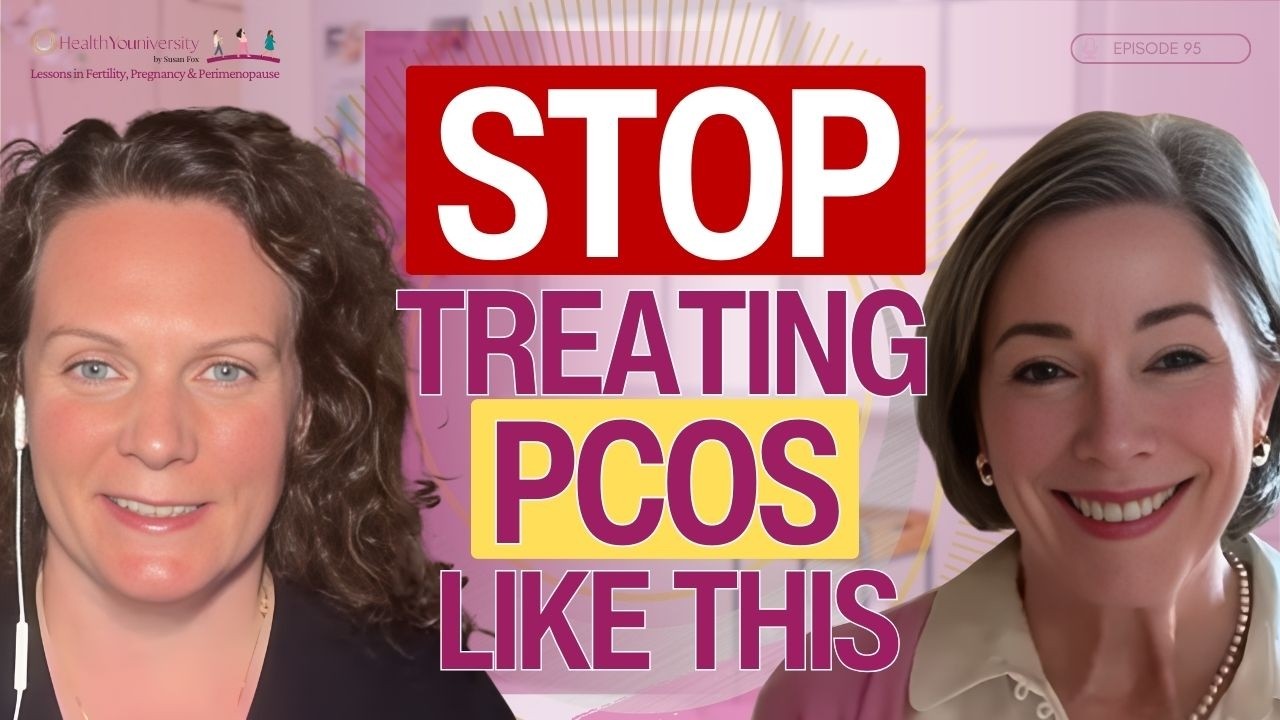
PCOS and Fertility: Why Polycystic Ovarian Syndrome Is More Than an Ovary Issue
Polycystic Ovarian Syndrome (PCOS) is often described as a fertility condition.
That misses the cause.
PCOS is a metabolic and hormonal syndrome that affects the ovaries — but it begins far upstream. While it influences ovulation and menstrual regularity, it is actually an issue of insulin resistance, inflammation, gut health, liver detoxification - overall metabolic function.
In this episode of HealthYouniversity, Dr. Susan Fox sits down with Dr. Angela Potter to discuss what PCOS really is, why conventional treatment often falls short, and how an individualized approach can restore ovulation and improve fertility outcomes.
If you have irregular periods, difficulty ovulating, insulin resistance, or have been told “just lose weight” or “just take Clomid or Letrozole,” this conversation reframes the narrative.
PCOS Is a Metabolic Syndrome
PCOS is defined by a cluster of symptoms: irregular or absent periods, elevated androgens, and unruptured follicles in the ovaries (erroneously called “cysts
But PCOS is driven by metabolic dysregulation. Environmental toxin overload, ultra-processed foods, blood sugar instability, poor sleep, chronic stress, and gut inflammation all contribute to hormonal imbalance. Over time, this dysregulation creates a cascade of inflammatory signaling that disrupts ovulation.
When ovulation is disrupted, fertility is disrupted.
Understanding this pattern changes everything.
The Limits of the Standard PCOS Fertility Protocols
Many women with PCOS are placed on a predictable medical pathway:
Birth control pills in adolescence to regulate cycles. While this may be useful in creating predictable menstrual cycles, is masks the underlying problem.
When a women is trying to conceive, she’s given Letrozole or Clomid.
Next step, IVF.
Yet if nothing in the metabolic environment changes, the egg attempting to ovulate is developing in the same inflammatory, insulin-resistant environment as before.
Medications stimulate ovulation. They do not correct the metabolic terrain.
And egg quality reflects that terrain.
Egg Health Begins Months Before Ovulation
Folliculogenesis — the development of an egg from early potential to ovulation — takes approximately three to four months.
That means the egg you ovulate today reflects your nutrition, blood sugar regulation, stress levels, sleep quality, and toxin exposure from the previous several months.
When inflammation is high, insulin is spiking, and detoxification pathways are overloaded, inflammatory markers will accumulate in the follicular fluid in which a developing egg resides.
PCOS and Insulin Resistance: The Metabolic Core
Insulin resistance is one of the most common drivers of PCOS. And in the presence of insulin, fat metabolism shifts from breakdown to storage.
Moreover, when insulin levels are chronically elevated, androgen production increases. Elevated androgens then lead to irregular cycles or anovulation.
The takeaway message: the number on the scale is not the whole story.
Gut Health, Liver Function, and Hormonal Detoxification
Many women with PCOS experience chronic digestive distress: bloating, constipation, diarrhea, or gas — symptoms that are often dismissed as “normal.”
These are signs of inflammation, and inflammatory markers are not only present in the gut, they show up in follicular fluid - where eggs are trying to grow to ovulation.
Sleep, Circadian Rhythm, and Brain Signaling
Ovulation begins in the brain.
The hypothalamus and pituitary regulate the cascade of luteinizing hormone (LH) and follicle-stimulating hormone (FSH). Disrupted sleep, night shift work, excessive evening screen exposure, and irregular circadian rhythms alter this signaling.
In PCOS, LH and FSH ratios are often imbalanced.
Improving sleep hygiene — dark bedrooms, consistent sleep times, morning light exposure — can meaningfully support hormonal regulation. When the brain is in rhythm, ovarian signaling improves.
PCOS and Fertility: It Is Not Too Late
Ideally, metabolic optimization occurs before ovulation induction or IVF.
Realistically, integrative support can and should occur concurrent to a natural cycle or to an Advanced Reproductive Therapy such as IVF.
If there is time, three to six months of targeted changes can improve hormone balance, and implantation potential.
Preparation does not mean delay. It means strengthening the outcome.
The Emotional Toll of PCOS
Beyond the physical symptoms, PCOS carries emotional weight.
Women often describe feeling broken. Cheated by their own bodies.
Yet if root causes — insulin regulation, inflammation, gut health, sleep, toxin load — get addressed and healed, ovulation can return.
Women with PCOS get pregnant every day. The key is putting the missing pieces together.
An Individualized Approach to PCOS Fertility
There is “classic” PCOS with elevated androgens and weight gain.
There is “lean” PCOS where cycles may appear regular but ovulation is inconsistent.
Some are driven primarily by insulin resistance; others by inflammatory load, and others by stress and circadian disruption.
A step-by-step, individualized plan evaluates:
Blood sugar regulation
Inflammatory markers
Thyroid function
Gut health
Liver detoxification
Hormonal balance
Lifestyle patterns
PCOS Is a Lifelong Metabolic Condition — Not Just a Fertility Phase
Supporting PCOS improves not only fertility outcomes but long-term health: cardiovascular risk, insulin regulation, inflammation, and future hormonal transitions such as perimenopause.
For women carrying daughters, improving metabolic health may also influence genetic imprinting. So the changes you make now can have generational impact.
Final Thoughts on PCOS and Fertility
If you have PCOS and feel lost, discouraged, or told there is only one path forward, know this:
You are not broken. Your body is signaling imbalance.
Fertility treatment and integrative metabolic care do not compete. They collaborate.
Check out all of our episodes on the following platforms:
Register for a free 28-Day Detox Masterclass to improve Your Fertile Health:
https://susanfox1.easywebinar.live/gentle-detox
Know the status of your fertility health. Take our FREE Fertility Quiz now: http://yourfertilityquiz.com/
Fulfill your dream of a family. Know your best options for a healthy pregnancy: https://www.healthyouniversity.co/programs
Boost Employee Productivity by Investing in their Fertility Health. Check out our Corporate Wellness program and know the benefits it can bring to your company: https://www.healthyouniversity.co/corporate-wellness
Dr. Angela Potter is an integrative fertility doctor, nutritionist and leading expert in PCOS. She is the creator of the PCOS Fertility Protocol, which provides individualized approach to return to consistent ovulation and regular periods. As a speaker, she has shared the stage with global thought leaders from corporations like Google, Microsoft and Headspace. She’s also been featured on ABC, CBS and NBC.
Website: https://www.drangelapotter.com/
Medical Disclaimer:
By listening to the Health Youniversity podcast, you agree not to use this podcast as medical advice to treat any medical condition for yourself or others. Consult your healthcare provider for any medical issues you may have. This entire disclaimer also pertains to any guests or contributors to any Health Youniversity podcast.


