

IVF: What It Is, How It Works, Success Factors, and How to Prepare Your Body
Written by: Dr. Susan Fox, DACM, L.Ac., FABORM
Credentials: Fertility and Women’s Health Expert, Founder of HealthYouniversity
Updated: May 2026
Medical disclaimer: This article is educational and does not replace medical advice from your physician, OB-GYN, reproductive endocrinologist, urologist, midwife, oncologist, or licensed healthcare provider.
Key Takeaways
IVF, or in vitro fertilization, is a fertility treatment where eggs are retrieved from the ovaries, fertilized with sperm in a lab, and transferred as embryos into the uterus.
IVF is the most common type of assisted reproductive technology, or ART, which includes fertility treatments where eggs or embryos are handled to help achieve pregnancy.
IVF may help people with blocked fallopian tubes, male factor infertility, endometriosis, ovulation disorders, diminished ovarian reserve, genetic testing needs, or unexplained infertility.
One IVF cycle often takes about 2–3 weeks after preparations are complete, but the full process may take longer if testing, embryo freezing, genetic testing, or frozen embryo transfer is involved.
IVF success depends on many factors, including age, diagnosis, egg and sperm health, embryo development, uterine health, previous pregnancy history, and clinic-specific procedures.
Health Youniversity’s whole-body IVF preparation model centers on Nutrition, Circulation, Lifestyle, and Emotional Support.
Quick Answer
IVF is a fertility treatment where mature eggs are collected from the ovaries, fertilized with sperm in a laboratory, and transferred as embryos into the uterus. It may help people with blocked fallopian tubes, male factor infertility, endometriosis, ovulation disorders, diminished ovarian reserve, genetic concerns, or unexplained infertility. Preparing for IVF should include medical testing, nutrition, hydration, lifestyle support, emotional care, and a clear plan with your fertility team.
Introduction
IVF can feel like the most advanced step in fertility care.
It can also feel overwhelming. There are medications, injections, ultrasounds, blood tests, egg retrieval, sperm preparation, fertilization updates, embryo reports, transfer decisions, pregnancy testing, and the emotional weight of waiting for results.
But IVF is not just a lab procedure.
It is a medical process that works with your eggs, sperm, hormones, uterine environment, nervous system, and whole-body health.
In this guide, you’ll learn what IVF is, how it works, who it may help, what affects success, what risks to understand, how to prepare your body, and what questions to ask before starting treatment.
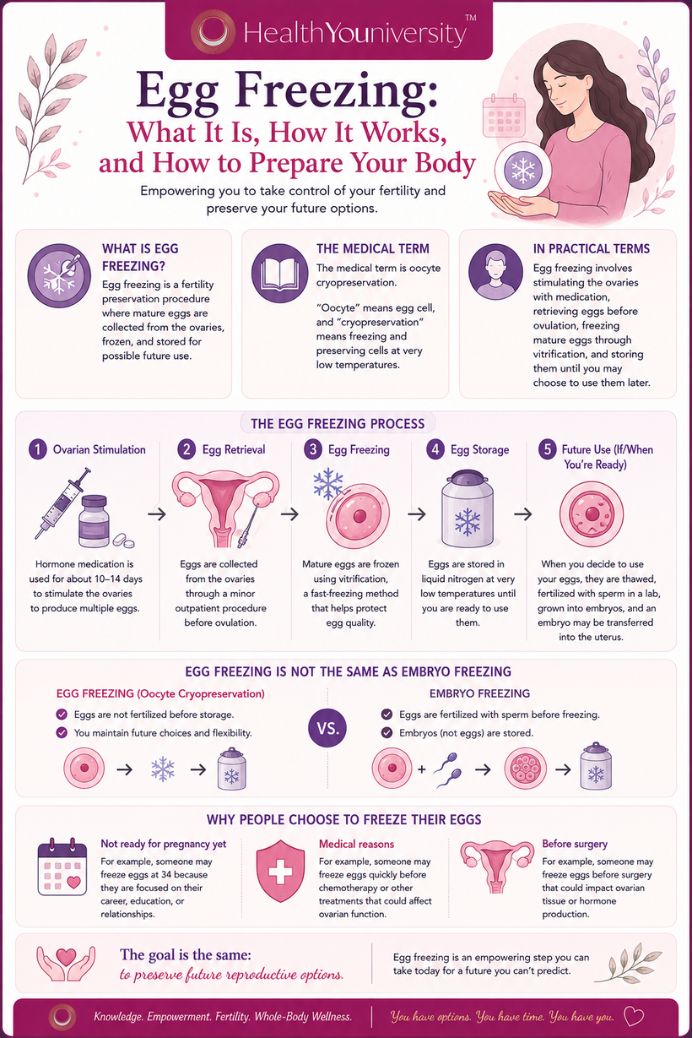
What Is IVF?
IVF is a fertility treatment where mature eggs are collected from the ovaries, fertilized with sperm in a laboratory, and transferred as embryos into the uterus.
IVF stands for in vitro fertilization. “In vitro” means “in glass,” which refers to fertilization happening outside the body in a lab.
The CDC defines assisted reproductive technology, or ART, as fertility treatments or procedures where eggs or embryos are handled to help achieve pregnancy. ART generally involves surgically removing eggs from the ovaries, combining them with sperm in a laboratory, and returning embryos to the uterus or to a gestational carrier. IVF is the most common type of ART.
In practical terms, IVF helps when sperm and egg need medical assistance to meet, fertilize, develop into embryos, and reach the uterus.
For example, IVF may be recommended when fallopian tubes are blocked, sperm parameters are significantly affected, embryo genetic testing is needed, or pregnancy has not happened after other treatments.
IVF is powerful.
But IVF is not a guarantee.
It is a medical treatment that requires individualized planning, realistic expectations, and support for the whole person.
What IVF Is Not
IVF is often misunderstood.
IVF is not:
A guaranteed pregnancy
A guaranteed live birth
Always the first fertility treatment
Only for female-factor infertility
Only about embryo transfer
A replacement for medical diagnosis
A replacement for whole-body health
A process where every egg becomes an embryo
A process where every embryo becomes a baby
Many people think IVF means “the clinic will take over from here.”
The better way to understand it is this: IVF gives the lab and medical team more control over some steps of reproduction, but the process still depends on egg health, sperm health, embryo development, uterine health, age, diagnosis, and overall health.
Why Is IVF Important?
IVF matters because it can create pregnancy possibilities when natural conception, ovulation medications, timed intercourse, or IUI may not be enough.
IVF can help when:
Fallopian tubes are blocked or damaged
Sperm count, movement, or shape is significantly affected
Endometriosis may be interfering with fertility
Ovulation is irregular or absent
Age or ovarian reserve makes timing more urgent
Embryo genetic testing is recommended
Fertility preservation is needed
Previous fertility treatments have not worked
Mayo Clinic describes IVF as a complex series of procedures that can lead to pregnancy and notes that it may be used for infertility or to prevent passing genetic problems to a child.
Here’s why that matters.
IVF is not rare. But it is not simple.
The process can be physically, emotionally, financially, and logistically demanding. Health Youniversity’s approach frames IVF support as more than the procedure itself, using Nutrition, Circulation, Lifestyle, and Emotional Support as the foundation for whole-body fertility preparation.
How Does IVF Work?
IVF works by supporting several steps of reproduction outside and inside the body.
IVF Step
What Happens
Why It Matters
Ovarian stimulation
Injectable medications help multiple follicles grow
More eggs may create more chances for fertilization and embryo development
Monitoring
Bloodwork and ultrasounds track follicle growth and hormone levels
Helps your clinic adjust medications and time retrieval
Trigger shot
Medication helps eggs complete final maturation
Prepares eggs for retrieval
Egg retrieval
Eggs are collected from the ovaries using ultrasound guidance
Retrieves eggs before ovulation
Sperm collection or preparation
Sperm is collected, thawed, or prepared
Supports fertilization
Fertilization
Eggs and sperm are combined in the lab, sometimes using ICSI
Creates embryos
Embryo culture
Embryos grow in the lab for several days
Helps identify embryos for transfer or freezing
Embryo transfer
An embryo is placed into the uterus
Allows implantation to occur
Pregnancy test
Bloodwork checks for pregnancy hormone
Confirms whether implantation occurred
Mayo Clinic explains that IVF involves collecting mature eggs from the ovaries, fertilizing them with sperm in a lab, and placing one or more embryos into the uterus. One full cycle often takes about 2–3 weeks, although the process can take longer if steps are split into different parts.
Who Is IVF For?
IVF may be recommended for people or couples who need more support than timed intercourse, ovulation medications, or IUI can provide.
1. People With Blocked or Damaged Fallopian Tubes
If both fallopian tubes are blocked or damaged, sperm and egg may not be able to meet naturally.
IVF bypasses the fallopian tubes because fertilization happens in the lab.
2. People With Male Factor Infertility
Male factor infertility may involve low sperm count, poor motility, abnormal morphology, ejaculation concerns, or prior reproductive injury.
IVF with ICSI may be recommended when a sperm needs to be injected directly into an egg.
3. People With Endometriosis
Endometriosis can affect fertility through inflammation, scar tissue, altered pelvic anatomy, ovarian involvement, or changes in the reproductive environment.
Some people with endometriosis may conceive naturally, while others may need IVF depending on severity, age, ovarian reserve, pain, prior surgeries, and fertility history.
4. People With Ovulation Disorders
Conditions like PCOS or hypothalamic amenorrhea can make ovulation irregular.
Some ovulation disorders respond to medication or lifestyle support. IVF may be considered if other treatments do not work or if additional fertility factors are present.
5. People With Diminished Ovarian Reserve or Advanced Reproductive Age
Age and ovarian reserve can affect egg number and egg quality.
ASRM states that female fertility declines with increasing age and that female age is the single most important predictor of fecundity.
ASRM recommends evaluation after 12 months of trying for women under 35, after 6 months for women 35 or older, and more immediate evaluation for women over 40 or when a known fertility-related condition is present.
6. People With Genetic Testing Needs
IVF may be used when embryo genetic testing is recommended, such as when a person or couple carries a known genetic condition.
7. People With Unexplained Infertility
Unexplained infertility means standard testing has not found a clear cause.
IVF may be considered after other options depending on age, duration of trying, prior treatments, and personal goals.
IVF vs. IUI vs. Natural Conception
Option
How It Works
Best For
Main Limitation
Natural conception
Sperm and egg meet inside the body
Regular ovulation, open tubes, adequate sperm health
Timing, sperm, ovulation, tubal, or uterine factors may interfere
IUI
Prepared sperm is placed into the uterus around ovulation
Mild male factor, donor sperm, unexplained infertility, timing concerns
Fertilization still happens inside the body
IVF
Eggs are retrieved and fertilized in a lab, then embryos are transferred
Tubal disease, significant male factor, endometriosis, genetic testing needs, failed prior treatments
More medically intensive, costly, and emotionally demanding
The best option depends on your diagnosis, age, sperm results, fallopian tube status, ovarian reserve, treatment history, and goals.
What Are the Main Types of IVF Cycles?
1. Fresh IVF Cycle
A fresh IVF cycle means ovarian stimulation, egg retrieval, fertilization, embryo growth, and embryo transfer happen within the same general treatment cycle.
This may be appropriate for some patients, but not everyone.
2. Frozen Embryo Transfer Cycle
A frozen embryo transfer, or FET, means embryos are frozen after fertilization and transferred in a later cycle.
This can allow time for genetic testing, recovery after retrieval, hormone optimization, or better timing for the uterine lining.
3. IVF With ICSI
ICSI stands for intracytoplasmic sperm injection.
In ICSI, one sperm is injected directly into one egg. This may be used for male factor infertility, prior fertilization issues, frozen eggs, or other lab-specific reasons.
4. IVF With PGT
PGT stands for preimplantation genetic testing.
It may be used to test embryos for chromosomal abnormalities or specific inherited conditions. PGT does not guarantee pregnancy, but it may help guide embryo selection in certain cases.
5. Donor Egg or Donor Sperm IVF
Donor eggs or donor sperm may be used when egg or sperm factors make conception difficult or when a patient’s family-building plan requires donor gametes.
6. Gestational Carrier IVF
A gestational carrier may be used when someone cannot safely carry a pregnancy or does not have a uterus.
In this process, an embryo is transferred into the uterus of the gestational carrier.
Fresh Transfer vs. Frozen Embryo Transfer
Transfer Type
Fresh embryo transfer
Frozen embryo transfer
Freeze-all cycle
What It Means
An embryo is transferred shortly after egg retrieval and fertilization
Embryos are frozen and transferred in a later cycle
All viable embryos are frozen rather than transferred fresh
Why It May Be Used
May shorten the timeline when medically appropriate
May allow recovery after retrieval, genetic testing, or more controlled lining preparation
May be used because of hormone levels, OHSS risk, PGT, or medical timing
Your clinic should explain why a fresh transfer or frozen transfer is recommended for your body, diagnosis, and cycle results.
What Results Can You Expect From IVF?
The short answer: IVF success depends on many factors.
CDC notes that ART success rates vary according to age, infertility diagnosis, previous pregnancy history, and ART procedures used. It also cautions that average success rates may not reflect an individual or couple’s actual chance of success.
The most important factors include:
Age at egg retrieval
Ovarian reserve
Egg quality
Sperm quality
Embryo development
Embryo chromosomal status
Uterine health
Diagnosis
Prior pregnancy history
Clinic protocols
Number of embryos transferred
Whether embryos are fresh or frozen
Overall health
Think of IVF as a process of probabilities.
IVF Stage
Follicle growth
Egg retrieval
Fertilization
Embryo development
Genetic testing, if used
Embryo transfer
Positive pregnancy test
Ongoing pregnancy
What Can Happen
Not every follicle contains a mature egg
Some retrieved eggs may be immature
Not every mature egg fertilizes
Not every fertilized egg becomes a usable embryo
Not every embryo is chromosomally typical
Not every embryo implants
Not every positive test becomes an ongoing pregnancy
Not every pregnancy results in live birth
That does not make IVF hopeless.
It makes clear counseling essential.
How Long Does IVF Take?
One IVF cycle often takes about 2–3 weeks once preparations are complete, but the full timeline can be longer if testing, genetic screening, embryo freezing, or frozen embryo transfer is involved.
A more realistic timeline may look like this:
Stage
Consultation and testing
Ovarian stimulation
Egg retrieval
Fertilization and embryo growth
Genetic testing, if used
Frozen embryo transfer preparation
Pregnancy test after transfer
Common Timeline
A few weeks to a few months
About 8–14 days
One procedure day, with short recovery
About 3–7 days
Often adds time
Several weeks or more
Usually about 9–14 days after transfer, depending on clinic protocol
Your timeline may be shorter or longer depending on your diagnosis, cycle start, insurance authorization, clinic schedule, medication response, embryo testing, and whether you do a fresh or frozen transfer.
The goal is not just speed.
The goal is a plan that is medically appropriate, emotionally manageable, and aligned with your fertility goals.
How Much Does IVF Cost?
IVF costs vary widely by clinic, location, medication dose, insurance coverage, lab services, embryo freezing, genetic testing, and the number of cycles needed.
Costs may include:
Initial consultation
Bloodwork
Ultrasounds
Medications
Egg retrieval
Anesthesia
Fertilization
ICSI, if used
Embryo culture
PGT, if used
Embryo freezing
Annual storage
Fresh or frozen embryo transfer
Additional medications for transfer
Pregnancy monitoring
Before starting IVF, ask your clinic for a written estimate that separates medical, medication, lab, storage, embryo testing, and future transfer costs.
Also ask what is not included.
That is often where surprise expenses appear.
What Are the Risks of IVF?
IVF is widely used, but it is still a medical treatment with risks and tradeoffs.
Possible risks include:
Medication side effects
Bloating, mood changes, headaches, or pelvic discomfort
Ovarian hyperstimulation syndrome
Bleeding, infection, or injury during egg retrieval
Anesthesia risks
Ectopic pregnancy
Multiple pregnancy if more than one embryo is transferred
Premature delivery or low birth weight
Emotional stress
Financial strain
Mayo Clinic lists IVF risks including stress, egg retrieval complications, ectopic pregnancy, multiple pregnancy, premature delivery, and low birth weight.
One important safety shift in modern IVF is the move toward single embryo transfer when appropriate. ASRM guidance aims to promote singleton pregnancy and reduce multiple pregnancies. For favorable-prognosis patients, ASRM states that transfer of a euploid embryo should be limited to one regardless of patient age and that patients under 35 should be strongly encouraged to receive a single-embryo transfer.
The Health Youniversity Four-Pillar IVF Preparation Framework
Health Youniversity teaches that fertility preparation is not only about diagnosis, labs, weight, or food. Its Preconception Plan focuses on Nutrition, Circulation, Lifestyle, and Emotional Support as the foundation for reproductive vitality.
1. Nutrition
Nutrition supports blood sugar balance, inflammation balance, hormone metabolism, egg health, sperm health, energy, and pregnancy readiness.
This does not mean following a perfect fertility diet.
It means building a steady foundation with protein, healthy fats, fiber-rich carbohydrates, colorful plants, hydration, and provider-approved supplementation.
2. Circulation
Circulation matters because reproductive organs need nutrient-rich blood flow.
Before stimulation, gentle movement may support metabolic health, stress regulation, and circulation. During stimulation, your clinic may advise against high-impact exercise, twisting, jumping, or intense abdominal movement because enlarged ovaries can increase discomfort or risk.
Health Youniversity’s Preconception Plan focuses on targeted circulation to the ovaries and uterus as part of reproductive health support.
3. Lifestyle
Lifestyle support includes sleep, alcohol reduction, smoking cessation, caffeine moderation, toxin reduction, and product changes when possible.
The Preconception Plan includes lifestyle routines that support whole health and reproductive health, including hydration, reducing BPA and phthalates, replacing personal care products with healthier versions, and supporting sleep hygiene.
4. Emotional Support
IVF is not only physically demanding.
It can bring hope, grief, uncertainty, financial pressure, relationship strain, and fear with every clinic update.
Health Youniversity includes guided imagery, stress reduction, qigong, and individualized support to help calm the nervous system and support the emotional side of fertility preparation.
This is not about “just relaxing.”
It is about feeling supported through a process that can be emotionally intense.
How to Prepare for IVF: Step-by-Step
Step 1: Understand Your Diagnosis
Start by asking your fertility team to explain why IVF is being recommended.
Ask:
Is the main factor egg-related, sperm-related, tubal, uterine, ovulatory, genetic, age-related, endometriosis-related, or unexplained?
Are there multiple factors?
What does IVF solve in my specific case?
What does IVF not solve?
This matters because IVF should be a strategy, not just the next default step.
Practical tip: Ask your doctor to explain your diagnosis in one or two sentences you can repeat back.
Step 2: Review Your Testing
A complete fertility evaluation may include ovulation assessment, reproductive tract structure and patency, and semen evaluation when sperm is involved. ASRM states that when a male partner is contributing to the pregnancy, evaluation of both partners should begin at the same time, and at least one semen analysis should be obtained at the start of infertility evaluation.
Discuss whether you need:
AMH
FSH and estradiol
Antral follicle count
Thyroid testing
Prolactin, if indicated
Vitamin D or iron status, if clinically relevant
Semen analysis
Uterine cavity evaluation
HSG or SHG, if tubal or uterine evaluation is needed
Genetic carrier screening
Infectious disease screening
Health Youniversity’s Preconception Plan also emphasizes reviewing reproductive hormones, sperm analysis when relevant, physical fertility evaluations when needed, and whole-health labs such as complete thyroid panel, vitamin D, iron, and ferritin.
Step 3: Ask About the IVF Protocol
Your protocol is the medication and monitoring plan your clinic uses to stimulate your ovaries and prepare for retrieval.
Ask:
What protocol are you recommending?
Why is this protocol right for me?
How many follicles do we expect?
What medication side effects should I watch for?
What symptoms require a call to the clinic?
Are we planning a fresh transfer or freeze-all cycle?
Will ICSI or PGT be recommended?
This helps you understand the “why” behind the plan.
Step 4: Prepare Your Body Before Stimulation
Before stimulation begins, focus on the basics that support whole-body readiness.
Start with:
Regular meals
Adequate protein
Hydration
Sleep rhythm
Gentle movement
Reduced alcohol
Smoking and vaping cessation
Lower-toxin product swaps
Stress support
Provider-approved supplements only
This does not guarantee a specific number of eggs or embryos.
It helps support the body entering treatment.
Step 5: Prepare for the Logistics
IVF involves appointments, medication timing, monitoring, and quick decisions.
Prepare:
How long should I rest?
What symptoms are expected?
What symptoms are urgent?
When can I return to exercise?
What should I eat and drink after retrieval?
What happens if I am at risk for OHSS?
Do not push through severe pain, shortness of breath, rapid weight gain, heavy bleeding, fever, or reduced urination. Call your clinic if symptoms feel concerning.
Step 7: Prepare for Embryo Updates
Embryo development can be one of the most emotional parts of IVF.
Not every egg becomes an embryo. Not every embryo continues growing. Not every embryo is transferable.
Before retrieval, ask:
When will I get fertilization results?
When will I get embryo development updates?
What happens on day 3 versus day 5, 6, or 7?
Will embryos be frozen?
Will embryos be tested?
What happens if there are no embryos to transfer?
This helps reduce shock and gives you a clearer framework for the waiting.
Step 8: Prepare for Embryo Transfer
If you are doing a transfer, ask whether it will be fresh or frozen.
Also ask:
How will my lining be prepared?
What medications will I take?
How many embryos are recommended?
Why is that number recommended?
What are the risks of twins or multiples?
What activity restrictions do you recommend after transfer?
When is the pregnancy test?
ASRM guidance emphasizes reducing multiple pregnancy risk and promoting singleton pregnancy when appropriate.
Step 9: Build Emotional Support Before the Two-Week Wait
The wait after embryo transfer can feel endless.
Decide in advance:
Who will know your transfer date?
Who will know your pregnancy test date?
Do you want people checking in?
What will you do if the result is negative?
What will you do if the result is positive but uncertain?
What helps your nervous system feel safe?
This is not just mindset.
It is preparation for one of the most emotionally charged parts of the process.
IVF Preparation Checklist
Preparation Area
Diagnosis
Ovarian reserve
Sperm health
Uterine evaluation
Tubal evaluation
Medications
Nutrition
Movement
Logistics
Emotional support
What to Do
Ask why IVF is recommended
Review AMH, FSH, estradiol, AFC
Complete semen analysis when sperm is involved
Ask if ultrasound, saline sonogram, or hysteroscopy is needed
Ask if HSG/SHG is needed
Review prescriptions, herbs, and supplements
Build steady meals with protein, fats, fiber, plants
Use gentle movement before stimulation
Organize appointments, injections, and retrieval transportation
Plan support before embryo updates and testing
Why It Matters
Helps make IVF a strategy, not just a default
Helps set expectations for stimulation
Supports fertilization planning
Supports transfer planning
Helps clarify diagnosis and risk
Reduces interaction risk
Supports whole-body readiness
Supports circulation and stress regulation
Reduces cycle stress
Supports nervous system resilience
What Questions Should You Ask Before Starting IVF?
Bring these questions to your fertility clinic:
Why are you recommending IVF for my case?
What are my chances based on my age, diagnosis, and testing?
How many cycles might I realistically need?
What protocol do you recommend and why?
Do we need ICSI?
Do we need PGT?
Are we planning a fresh transfer or frozen transfer?
How many embryos do you recommend transferring?
What are the risks of OHSS for me?
What are the total estimated costs?
What happens if I do not respond well to medication?
What happens if no embryos develop?
What lifestyle changes do you recommend before treatment?
What supplements should I continue, stop, or avoid?
Who do I call after hours if I have symptoms?
The better question is not only, “What is the protocol?”
The better question is, “Why is this the best protocol for my body, my diagnosis, and my goals?”
Tools and Resources That Can Support IVF
IVF Consultation Checklist
Use this to organize questions about diagnosis, protocol, medications, retrieval, fertilization, embryo testing, transfer, and costs.
Medication Calendar
IVF medications are time-sensitive. Use alarms, written instructions, and clinic-provided schedules.
Lab and Results Tracker
Track AMH, FSH, estradiol, progesterone, follicle counts, sperm results, fertilization results, embryo updates, and transfer details.
Nutrition and Hydration Plan
Use simple, repeatable meals with protein, healthy fats, fiber, colorful plants, and hydration.
Emotional Support Plan
Include therapy, coaching, guided imagery, breathwork, meditation, acupuncture, or a trusted support person.
Health Youniversity Preconception Plan
Health Youniversity’s Preconception Plan supports people preparing for IVF, egg freezing, or natural conception with nutrition, acupoint stimulation, guided imagery, qigong, recipes, sample menus, and individualized support.
Common Mistakes to Avoid With IVF
1. Thinking IVF Guarantees a Baby
IVF can improve the chances of pregnancy for many people, but it does not guarantee a live birth.
Better approach: Ask for age-specific and diagnosis-specific expectations.
2. Waiting Too Long to Get Evaluated
Time matters, especially after 35 or when there are known fertility concerns.
Better approach: Follow ASRM guidance: seek evaluation after 12 months if under 35, after 6 months if 35 or older, sooner if over 40 or if there is a known fertility-related condition.
3. Ignoring Sperm Health
IVF still depends on sperm health.
Better approach: Include semen analysis and male partner evaluation when sperm is part of the plan.
4. Comparing Your Results to Someone Else’s
Your friend’s egg number, embryo count, or transfer result does not predict yours.
Better approach: Compare your results only to your own diagnosis, age, ovarian reserve, and clinic expectations.
5. Taking Supplements Without Telling Your Clinic
Some supplements may interact with medication, affect bleeding risk, or be inappropriate during stimulation or transfer.
Better approach: Give your clinic a complete list of everything you take.
6. Overexercising During Stimulation
During stimulation, ovaries can become enlarged.
Better approach: Follow your clinic’s exercise restrictions and choose gentle movement if approved.
7. Skipping Emotional Support
IVF can be draining for the body, mind, and finances. Mayo Clinic specifically lists stress as one of the risks of IVF.
Better approach: Build emotional support into the process from the beginning.
8. Focusing Only on the Transfer
The embryo transfer matters, but IVF begins long before transfer day.
Better approach: Prepare for the full arc: testing, stimulation, retrieval, embryo development, transfer, and recovery.
FAQs
What is IVF?
IVF is a fertility treatment where mature eggs are retrieved from the ovaries, fertilized with sperm in a lab, and transferred as embryos into the uterus. It is the most common type of assisted reproductive technology.
How does IVF work?
IVF works by stimulating the ovaries to develop multiple eggs, retrieving those eggs, fertilizing them with sperm in a lab, growing embryos, and transferring an embryo into the uterus. Some cycles also include ICSI, PGT, embryo freezing, or frozen embryo transfer.
How long does IVF take?
One IVF cycle often takes about 2–3 weeks after preparations are complete, but the full process can take longer if testing, genetic screening, embryo freezing, or frozen embryo transfer is involved.
Is IVF painful?
IVF is usually more uncomfortable than painful for many people, but experiences vary. Injections, bloating, pelvic pressure, blood draws, ultrasounds, retrieval recovery, and hormonal shifts can all be physically and emotionally demanding.
Who should consider IVF?
IVF may be considered for blocked fallopian tubes, significant male factor infertility, endometriosis, ovulation disorders, diminished ovarian reserve, advanced reproductive age, genetic testing needs, or unexplained infertility. A fertility specialist can help determine whether IVF is appropriate.
How successful is IVF?
IVF success depends on age, diagnosis, egg and sperm health, embryo development, uterine health, treatment history, and clinic-specific protocols. CDC notes that average ART success rates may not reflect an individual’s actual chance of success, so personal counseling is essential.
What are the risks of IVF?
Risks may include medication side effects, ovarian hyperstimulation syndrome, retrieval complications, ectopic pregnancy, multiple pregnancy, premature delivery, low birth weight, emotional stress, and financial strain. Mayo Clinic lists several of these as IVF risks.
Does IVF require bed rest after embryo transfer?
Most clinics do not recommend strict bed rest for everyone after embryo transfer, but instructions vary. Follow your clinic’s specific guidance on activity, medications, and when to call with symptoms.
How many embryos should be transferred?
The number depends on age, embryo quality, genetic testing, prior IVF history, and medical risk. ASRM guidance encourages single embryo transfer in favorable situations to reduce the risks of twin or higher-order pregnancies.
Can I prepare my body before IVF?
The embryo transfer matters, but IVF begins long before transfer day.
Better approach: Prepare for the full arc: testing, stimulation, retrieval, embryo development, transfer, and recovery.
Conclusion
IVF is not just about retrieving eggs, fertilizing them in a lab, and transferring an embryo.
It is about understanding your diagnosis, preparing your body, supporting your nervous system, making informed decisions, and working with a care team that can guide you through each step.
When you understand how IVF works, what affects success, what risks to consider, and how to prepare, you can move through the process with more clarity and less fear.
If you are preparing for IVF, egg freezing, or natural conception, Health Youniversity’s Preconception Plan can help you support your whole-body fertility foundation with nutrition, circulation, lifestyle guidance, and emotional care.
Take the Fertility Quiz, explore the Preconception Plan, or schedule a Fertility Assessment Call with Health Youniversity

About The Author
Dr. Susan Fox
DACM, L.Ac., FABORM
Fertility and Women’s Health Expert, Founder of Health Youniversity
Dr. Susan Fox has 24 years of experience in women’s health and fertility support, with expertise in fertility coaching, IVF preparation, natural conception, IUI, PCOS, endometriosis, diminished ovarian reserve, and unexplained infertility. She is a Licensed Acupuncturist in California, a Health and Wellness Coach, and a Fellow of the Acupuncture & TCM Board of Reproductive Medicine.
FEATURED IN:



© 2026 Your Fertile Health LLC. All rights reserved. The content of this website, including but not limited to text, graphics, images, and any other material contained on this website,
is for informational purposes only and is the property of Your Fertile Health LLC. Unauthorized use, distribution, or reproduction is strictly prohibited.