

The Ultimate Guide to Preparing for Pregnancy: Preconception Care, Fertility Support, and Whole-Body Readiness
Written by: Dr. Susan Fox, DACM, L.Ac., FABORM
Credentials: Fertility and Women’s Health Expert, Founder of HealthYouniversity
Updated: May 2026
Medical disclaimer: This article is educational and does not replace medical advice from your physician, OB-GYN, reproductive endocrinologist, urologist, midwife, oncologist, or licensed healthcare provider.
Key Takeaways
Preparing for pregnancy means supporting your physical, reproductive, emotional, and lifestyle health before conception.
Pregnancy preparation is also called preconception care or prepregnancy counseling, and it should include medical history, medications, supplements, immunizations, nutrition, movement, substance use, environmental exposures, and genetic risks.
The CDC recommends 400 micrograms of folic acid daily for all women capable of becoming pregnant to help prevent neural tube defects.
Pregnancy preparation is not only for natural conception. It can also support people preparing for IVF, egg freezing, pregnancy after loss, or pregnancy after infertility.
Partner and sperm health matter. Pregnancy preparation should include sperm health when sperm is part of the plan.
Health Youniversity’s whole-body fertility model centers on four pillars: Nutrition, Circulation, Lifestyle, and Emotional Support.
Quick Answer
Preparing for pregnancy is the process of optimizing your whole-body health before conception to support fertility, implantation, early fetal development, pregnancy, birth, and postpartum recovery. It includes a preconception visit, folic acid or prenatal support, medication review, vaccine check, nutrition, cycle awareness, sperm health, movement, toxin reduction, and emotional support. The goal is not only to get pregnant, but to help your body create, receive, and nurture new life in the healthiest way possible.
Introduction
Many people begin thinking about pregnancy health after a positive test.
But your body begins preparing much earlier.
Your hormones, nutrient status, cycle patterns, blood sugar, sleep, stress response, medications, sperm health, environment, and medical history can all influence fertility and early pregnancy. Preparing before conception gives you time to address what is modifiable and get support for what needs medical care.
In this guide, you’ll learn what pregnancy preparation means, why it matters, when to start, what steps to take, and how to build a practical preconception plan whether you are trying naturally, preparing for IVF, considering egg freezing, or recovering from fertility challenges.
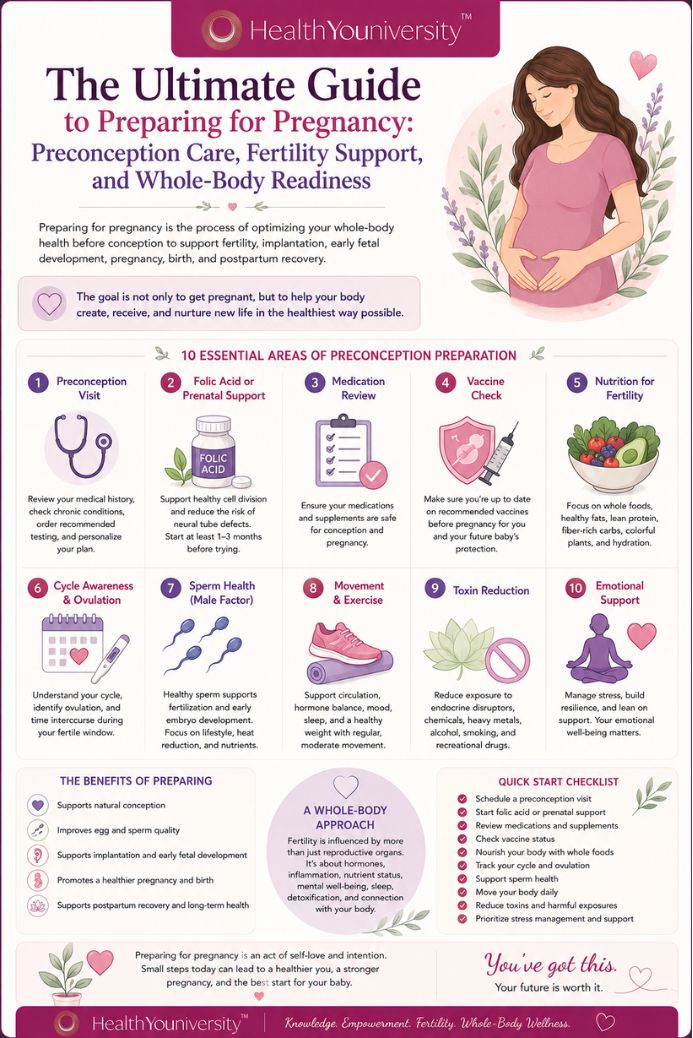
What Is Pregnancy Preparation?
Pregnancy preparation is the process of supporting your physical, reproductive, emotional, and lifestyle health before conception.
In medical terms, this is often called preconception care or prepregnancy counseling.
ACOG defines the goal of prepregnancy care as reducing the risk of adverse health effects for the woman, fetus, and neonate by optimizing health, addressing modifiable risk factors, and providing education about healthy pregnancy.
In practical terms, preparing for pregnancy may include:
Scheduling a preconception visit
Starting folic acid or a prenatal vitamin
Reviewing medications and supplements
Checking vaccine status
Tracking menstrual cycles and ovulation
Supporting sperm health
Eating for blood sugar, hormone, and nutrient support
Reducing alcohol, smoking, recreational drugs, and toxic exposures
Improving sleep, movement, and stress regulation
Seeking fertility support when needed
Preparing for pregnancy is not the same as trying to control every outcome.
It is about creating the healthiest foundation possible before conception begins.
What Pregnancy Preparation Is Not
Pregnancy preparation is often misunderstood.
It is not:
A guarantee that pregnancy will happen quickly
A replacement for medical care
A reason to delay fertility evaluation when help is needed
A perfect-diet checklist
A harsh detox plan
Only about taking prenatal vitamins
Only the responsibility of the person carrying the pregnancy
Something you should wait to start until after a positive test
Many people think pregnancy preparation begins once pregnancy begins.
The better way to understand it is this: the earliest weeks of pregnancy are influenced by the health, nutrients, hormones, and environment already present before conception.
Why Is Preparing for Pregnancy Important?
Preparing for pregnancy matters because health before pregnancy can affect fertility, early fetal development, pregnancy outcomes, and postpartum recovery.
The CDC recommends planning before pregnancy by talking with a healthcare provider, taking folic acid, stopping alcohol, smoking, and certain drugs, and avoiding toxic substances that can affect reproductive health.
Here’s why that matters.
Many of the most important early developmental events happen before someone even knows they are pregnant. Neural tube development, for example, happens very early in pregnancy, which is why folic acid is recommended before conception. The CDC states that getting 400 micrograms of folic acid daily can help prevent neural tube defects.
For many people, the challenge is not only “How do I get pregnant?”
The deeper question is: “How do I prepare my body to support a healthy pregnancy and baby?”
Health Youniversity’s Preconception Plan reflects this whole-body view: fertility is not only about labs, diagnosis, stress levels, weight, or food; it also includes nutrition, hydration, supplementation, circulation to the reproductive organs, lower toxic burden, and emotional mindset.
Preconception Care vs. Prenatal Care: What Is the Difference?
Type of Care
When It Happens
Main Goal
Examples
Preconception care
Before pregnancy
Prepare the body and reduce modifiable risks before conception
Folic acid, medication review, vaccine check, genetic screening, cycle awareness
Prenatal care
During pregnancy
Monitor pregnancy and support maternal-fetal health
Ultrasounds, pregnancy labs, fetal monitoring, pregnancy nutrition, birth planning
Fertility care
Before or during attempts to conceive
Diagnose or treat fertility barriers
Ovulation evaluation, semen analysis, HSG, IUI, IVF
Whole-body fertility preparation
Before conception or treatment
Support reproductive and overall health
Nutrition, circulation, lifestyle routines, emotional support
Preconception care does not replace prenatal care.
It helps create the foundation before prenatal care begins.
How Does Preparing for Pregnancy Work?
Pregnancy preparation works by supporting the systems involved in conception and early pregnancy.
Area of Preparation
Medical readiness
Nutrient status
Cycle awareness
Sperm health
Nutrition
Lifestyle
Emotional support
Why It Matters
Helps identify conditions that may affect pregnancy
Supports early fetal development
Helps identify ovulation and timing
Supports fertilization and embryo development
Supports hormones, blood sugar, inflammation, and energy
Reduces avoidable barriers
Helps regulate stress and build resilience
Example
Preconception visit, medication review, thyroid or diabetes management
Folic acid, prenatal vitamin, iron or vitamin D if needed
Tracking cycles, cervical mucus, ovulation tests
Semen analysis when needed, reduced heat/toxin exposure
Protein, healthy fats, fiber, colorful plants
Stop smoking, reduce alcohol, improve sleep
Therapy, guided imagery, breathwork, coaching
Think of pregnancy preparation as building the foundation before the house is built.
You are not trying to make your body perfect. You are helping your body become more supported, nourished, and ready.
When Should You Start Preparing for Pregnancy?
The short answer: start as early as you can.
For many people, a one-to-three-month preparation window is helpful because it gives time to start folic acid, review medications, address health concerns, improve nutrition, support sperm health, reduce toxic exposures, and understand the menstrual cycle.
The CDC specifically recommends having enough folic acid in the body at least 1 month before and during pregnancy to help prevent major birth defects of the baby’s brain and spine.
Health Youniversity’s Preconception Plan also notes that, when possible, a 3-month window can be helpful from a Traditional Chinese Medicine-informed perspective because it gives the body time to restore balance, rebuild energy, and improve circulation for reproductive health.
But here’s the nuance.
Do not delay medical care just to complete a perfect preparation plan. If you are over 35, have irregular cycles, have known PCOS or endometriosis, have a history of miscarriage, or are preparing for IVF, your best next step may be to prepare while also seeking professional guidance.
Preparing for Natural Conception vs. IVF vs. Egg Freezing
Path
What Preparation Should Focus On
Key Next Step
Natural conception
Ovulation, fertile window timing, sperm health, folic acid, lifestyle support
Track cycles and time intercourse around the fertile window
IVF preparation
Medical testing, ovarian reserve, sperm analysis, medication planning, retrieval/transfer support
Ask your fertility team what IVF solves in your case
Egg freezing
Ovarian reserve, age-based expectations, stimulation/retrieval planning, future-use counseling
Ask about AMH, antral follicle count, expected egg yield, and storage
Pregnancy after loss
Medical review, emotional support, uterine/hormonal evaluation if indicated
Ask what testing or support is appropriate before trying again
Pregnancy after 35
Fertility timeline, ovarian reserve context, preconception labs, earlier evaluation if needed
Do not wait too long to seek guidance if pregnancy does not happen
Whole-body preparation can happen alongside natural conception, IVF, egg freezing, or pregnancy after loss.
The Main Pillars of Preparing for Pregnancy
1. Medical Readiness
Medical readiness means making sure your body and care team are prepared before pregnancy begins.
ACOG recommends reviewing medical, surgical, psychiatric, medication, supplement, family, genetic, immunization, nutrition, exercise, substance use, and environmental exposure history during prepregnancy counseling.
This may include discussing:
Thyroid disease
Diabetes or insulin resistance
Hypertension
Autoimmune conditions
Mental health history
Prior miscarriage or pregnancy complications
Medications and supplements
Vaccination history
Genetic carrier screening
Menstrual cycle concerns
Fertility history
Many chronic conditions, including diabetes, hypertension, psychiatric illness, and thyroid disease, can affect pregnancy outcomes and should be managed before pregnancy when possible.
2. Folic Acid and Prenatal Nutrition
Folic acid is one of the most important preconception nutrients.
The CDC recommends that all women capable of becoming pregnant get 400 micrograms of folic acid daily. Folic acid can help prevent neural tube defects, which are serious birth defects of the baby’s brain and spine.
A prenatal vitamin may also include:
Iron
Iodine
Vitamin D
B12
Choline
Omega-3s
Zinc
Selenium
The right prenatal depends on your diet, labs, medical history, and provider recommendations.
3. Fertility and Cycle Awareness
Your menstrual cycle gives useful information about your reproductive health.
Cycle tracking can help you understand:
How often your period comes
Whether cycles are predictable
Whether ovulation may be happening
When your fertile window may occur
Whether pain, spotting, heavy bleeding, or irregularity needs evaluation
ASRM defines the fertile window as the 6-day interval ending on the day of ovulation and notes that intercourse every 1–2 days during that window can help maximize the chance of conception.
4. Partner and Sperm Health
Pregnancy preparation is not only about the person carrying the pregnancy.
Sperm health matters too.
Sperm quality can be affected by smoking, alcohol, marijuana or recreational drugs, heat exposure, sleep, nutrition, medications, chronic illness, and environmental exposures. ASRM recommends healthy lifestyle habits for both men and women attempting pregnancy and discourages smoking and recreational drugs while trying to conceive.
Partner preparation may include:
Stopping smoking or vaping
Reducing alcohol
Avoiding recreational drugs
Improving sleep
Eating antioxidant-rich foods
Avoiding frequent hot tub or sauna exposure
Reviewing medications with a clinician
Considering semen analysis if conception is delayed
This is a shared process whenever sperm is part of the equation.
5. Lifestyle and Environmental Support
Lifestyle changes do not guarantee pregnancy, but they can reduce avoidable barriers.
CDC recommends stopping alcohol, smoking, and certain drugs before pregnancy, and avoiding harmful chemicals, environmental contaminants, and toxic substances at home and work.
ACOG also recommends that obstetric care clinicians consider environmental exposure questions during prepregnancy visits and prenatal care.
A practical low-toxin approach may include:
Avoid heating food in plastic
Use glass or stainless steel for hot foods
Choose fragrance-free or lower-toxin cleaning products
Reduce synthetic fragrance in personal care
Wash produce well
Avoid pesticides when possible
Review workplace exposures
Keep caffeine moderate
Avoid alcohol while actively trying or once pregnancy is possible
The goal is not fear.
The goal is to lower the most common avoidable exposures while keeping your plan realistic.
6. Emotional and Nervous System Support
Preparing for pregnancy can bring hope, pressure, grief, fear, and uncertainty.
This is especially true for people who have experienced infertility, miscarriage, failed IVF cycles, PCOS, endometriosis, diminished ovarian reserve, or pregnancy complications.
Health Youniversity’s Preconception Plan includes guided imagery, stress reduction, qigong, and individualized coaching to help calm the nervous system and support the mind-body connection.
Emotional support may include:
Therapy
Fertility coaching
Support groups
Breathwork
Meditation
Guided imagery
Journaling
Acupuncture or acupoint stimulation
Partner communication
Clear boundaries around fertility conversations
This is not about “just relaxing.”
It is about helping your body feel supported while you move through a major life transition.
What Should You Expect When Preparing for Pregnancy?
Preparing for pregnancy should feel clear, supportive, and individualized.
It should not feel like a punishment, detox obsession, or impossible checklist.
Expectation
You may need medical review
You may not need every lab
You do not need a perfect diet
Your partner may need support too
You may need earlier fertility care
Emotional support matters
What It Means
Medication, vaccine, and condition management are part of preparation
Testing should be based on history, symptoms, age, and fertility goals
Consistency matters more than rigid rules
Sperm health is part of conception health
Age, irregular cycles, recurrent loss, or known diagnoses can change the timeline
Pregnancy preparation is both physical and emotional
A guarantee that pregnancy will happen quickly
A replacement for medical care
A reason to delay fertility evaluation when help is needed
A perfect-diet checklist
A harsh detox plan
Only about taking prenatal vitamins
Only the responsibility of the person carrying the pregnancy
Something you should wait to start until after a positive test
The better question is not, “Am I doing everything perfectly?”
The better question is, “Do I have a clear plan that supports my body, my fertility, and my next step?”
How to Prepare for Pregnancy: Step-by-Step
Step 1: Schedule a Preconception Visit
Start with a preconception visit with your OB-GYN, primary care provider, midwife, or fertility specialist.
Bring a list of:
Medical diagnoses
Medications
Supplements and herbs
Prior pregnancies or losses
Surgeries
Menstrual cycle concerns
Family history
Vaccination history
Lifestyle exposures
Questions about fertility timing
ACOG recommends that patients seek medical care before attempting pregnancy or as soon as they believe they are pregnant to support correct dating and monitor medical conditions that may need treatment changes during pregnancy.
Practical tip: Ask, “What should I address before pregnancy rather than after I am already pregnant?”
Step 2: Review Medications and Supplements
Do not stop prescribed medication without guidance.
Instead, ask:
Is this medication safe while trying to conceive?
Is it safe during pregnancy?
Should the dose change?
Is there a safer alternative?
Are my supplements appropriate?
Should I stop any herbs or fertility products?
ACOG recommends reviewing all prescription medications, nonprescription medications, nutritional supplements, and herbal products during prepregnancy counseling because they may affect reproduction or pregnancy.
Practical tip: Bring photos of supplement labels to your appointment.
Step 3: Start Folic Acid or a Prenatal Vitamin
Start folic acid before pregnancy.
For most average-risk people who can become pregnant, the CDC recommends 400 micrograms of folic acid daily.
Ask your provider whether you need additional support based on:
Vegan or vegetarian diet
Prior anemia
Thyroid concerns
History of neural tube defect
Seizure medication use
Bariatric surgery
Digestive disorders
Vitamin D deficiency
Recurrent pregnancy loss
Practical tip: Do not assume more supplements are better. Personalize based on your health history and labs.
Step 4: Check Vaccines Before Pregnancy
Ask your provider to review your vaccine record.
ACOG recommends immunization assessment for women of reproductive age, including Tdap, measles-mumps-rubella, hepatitis B, and varicella, and annual influenza vaccination for all patients.
Ask about:
MMR immunity
Varicella immunity
Flu vaccine
COVID-19 vaccine
Tdap timing
Hepatitis B, if relevant
Travel-related vaccines, if needed
Some vaccines are given before pregnancy, while others are recommended during pregnancy.
Practical tip: Do this before trying because some vaccines may require timing considerations before conception.
Step 5: Build a Pregnancy-Supportive Nutrition Pattern
Nutrition should support blood sugar, hormones, inflammation balance, energy, and nutrient status.
Start with:
Protein at meals
Fiber-rich carbohydrates
Healthy fats
Colorful vegetables and fruits
Beans and legumes
Low-mercury fish
Nuts and seeds
Hydration
Regular meals
FDA and EPA recommend that people who might become pregnant, are pregnant, or are breastfeeding eat 8–12 ounces per week of a variety of seafood lower in mercury.
Plate Component
Protein
Healthy fat
Fiber-rich carb
Color
Hydration
Examples
Eggs, poultry, fish, lentils, tofu, Greek yogurt
Olive oil, avocado, nuts, seeds
Oats, quinoa, beans, sweet potatoes, fruit
Leafy greens, berries, peppers, cruciferous vegetables
Water, mineral-rich fluids, provider-approved herbal teas
Practical tip: Build meals around stability, not restriction.
Step 6: Learn Your Menstrual Cycle
Track your cycle for at least one to three months.
Track:
First day of bleeding
Cycle length
Cervical mucus
Ovulation predictor kit results
Basal body temperature, if helpful
PMS symptoms
Spotting
Pain
Flow changes
Intercourse timing
Cycle awareness can help you understand ovulation, fertile timing, and whether symptoms deserve medical evaluation.
Practical tip: Do not rely only on an app if your cycle varies. Apps estimate; your body gives current-cycle clues.
Step 7: Time Intercourse Around the Fertile Window
If you are trying naturally, timing matters.
ASRM notes that the fertile window is the 6-day interval ending on ovulation day and that intercourse every 1–2 days during the fertile window can help maximize fecundability.
A simple plan:
If tracking ovulation: have intercourse every 1–2 days during the fertile window.
If not tracking closely: have intercourse 2–3 times per week throughout the cycle.
If timing creates stress: choose consistency over perfection.
The goal is not to hit one perfect day.
The goal is to avoid missing the fertile window entirely.
Step 8: Support Sperm Health
If sperm is part of your pregnancy plan, include the sperm partner from the beginning.
Helpful steps may include:
Stop smoking or vaping
Avoid recreational drugs
Reduce heavy alcohol use
Support sleep
Eat antioxidant-rich foods
Avoid frequent hot tubs or saunas
Review medications with a clinician
Consider semen analysis if conception is delayed
Practical tip: Sperm health should not be evaluated only after months of female-focused testing.
Step 9: Reduce High-Impact Lifestyle Barriers
Start with the biggest barriers first.
Focus on:
Smoking
Vaping
Alcohol
Recreational drugs
High caffeine intake
Poor sleep
Significant stress overload
Unmanaged medical conditions
Environmental toxins
Unreviewed medications or supplements
CDC recommends stopping alcohol, smoking, and certain drugs before pregnancy because they can cause pregnancy problems such as premature birth, birth defects, and infant death.
This is not about becoming perfect.
It is about reducing the most meaningful risks and giving your body more support.
Step 10: Know When to Seek Fertility Support
Preparing for pregnancy also means knowing when not to wait.
ASRM states that evaluation should begin after 12 months of regular unprotected intercourse for women under 35, after 6 months for women 35 and older, and more immediately for women over 40 or when a condition known to cause infertility is present.
Situation
Under 35 with regular cycles
Age 35 or older
Over 40
Irregular or absent periods
Known or suspected PCOS
Known or suspected endometriosis
Recurrent miscarriage
Pelvic pain or prior ectopic pregnancy
Known sperm concerns
Prior chemotherapy, radiation, or ovarian surgery
When to Seek Support
After 12 months of trying
After 6 months of trying
Consider more immediate evaluation
Seek care sooner
Seek care sooner
Seek care sooner
Seek care sooner
Seek care sooner
Seek care sooner
Seek care sooner
Seeking help does not mean you failed.
It means you are protecting your time, health, and options.
What Tests Might Be Helpful Before Pregnancy?
The right tests depend on your medical history, cycle patterns, age, symptoms, and fertility goals.
Test or Screening
CBC
Ferritin and iron
Thyroid panel
Vitamin D
A1c or fasting glucose
Rubella and varicella immunity
STI screening
Genetic carrier screening
Pap/HPV screening, if due
Semen analysis
Progesterone testing
AMH/FSH/estradiol/AFC
Why It May Matter
Screens for anemia or general health concerns
Helps assess iron stores
Thyroid health can affect cycles and pregnancy
Useful if deficiency risk is present
Screens blood sugar and metabolic health
Helps identify vaccine needs before pregnancy
Supports reproductive and pregnancy health
Identifies inherited condition risks
Supports cervical health
Evaluates sperm count, motility, and morphology
May help confirm ovulation in some cases
May be used when fertility evaluation is indicated
Health Youniversity’s Preconception Plan recommendations include reviewing reproductive hormones such as AMH, FSH, LH, TSH, estradiol, and progesterone, along with whole-health labs such as complete thyroid panel, vitamin D, iron, and ferritin when appropriate.
The Health Youniversity Four-Pillar Pregnancy Preparation Framework
Health Youniversity’s Preconception Plan is built around four core pillars: Nutrition, Circulation, Lifestyle, and Emotional Support.
1. Nutrition
Nutrition is the foundation for hormone balance, egg health, sperm health, blood sugar, inflammation, and early fetal development.
This includes fertility-supportive foods, hydration, and supplementation when appropriate.
2. Circulation
Circulation focuses on supporting blood flow to the ovaries and uterus.
From a whole-health perspective, this may include movement, acupoint stimulation, qigong, stretching, and practices that help the body receive nutrient-rich blood flow.
3. Lifestyle
Lifestyle includes daily habits that influence reproductive health.
This may include sleep, toxin reduction, product swaps, movement, stress patterns, alcohol reduction, smoking cessation, and healthier routines.
4. Emotional Support
Fertility is not only physical.
Emotional support helps reduce stress, reconnect with the body, and support the nervous system during the uncertainty of trying to conceive, IVF, egg freezing, or pregnancy after loss.
Pregnancy Preparation Checklist
Preparation Area
What to Do
Why It Matters
Preconception visit
Review health history, medications, vaccines, and pregnancy goals
Identifies issues before pregnancy
Folic acid/prenatal support
Start provider-approved folic acid or prenatal support
Supports early fetal development
Medication review
Review prescriptions, OTC meds, supplements, and herbs
Helps reduce pregnancy-related medication risks
Vaccine check
Review MMR, varicella, flu, Tdap, hepatitis B, and other needs
Helps protect pregnancy and baby
Cycle tracking
Track cycle length, bleeding, mucus, ovulation signs, and pain
Helps identify ovulation and cycle concerns
Partner/sperm health
Review lifestyle and consider semen analysis if needed
Supports fertilization and embryo development
Nutrition
Eat protein, fiber, healthy fats, colorful plants, and lower-mercury fish
Supports whole-body and reproductive health
Movement
Use sustainable movement, walking, stretching, or strength training
Supports circulation, blood sugar, and mood
Toxin reduction
Reduce smoking, alcohol, harmful chemicals, and high-impact exposures
Lowers avoidable reproductive risks
Emotional support
Build support through therapy, coaching, mindfulness, or community
Helps reduce isolation and stress overload
Tools and Resources That Can Help You Prepare for Pregnancy
Preconception Visit Checklist
Use this to organize medications, supplements, cycle history, family history, vaccines, prior pregnancies, and questions for your provider.
Cycle Tracking Journal
Track period dates, cervical mucus, ovulation test results, symptoms, pain, mood, and intercourse timing.
Fertility Assessment Quiz
A fertility quiz can help identify where you may need more support, especially if you are unsure whether your main challenge is cycle timing, nutrition, stress, lifestyle, or whole-body readiness.
Lab and Results Tracker
Keep bloodwork, semen analysis, imaging, vaccine status, and provider notes in one place.
Low-Toxin Product Checklist
Start with food storage, cookware, cleaning products, fragrance, skincare, and workplace exposures.
Emotional Support Plan
Decide who you will talk to, what boundaries you need, and what practices help you feel grounded.
Health Youniversity Preconception Plan
Health Youniversity’s Preconception Plan includes a 4-week self-paced protocol, acupoint stimulation, guided imagery meditations, qigong practices, recipes, sample menus, shopping lists, and individualized support for people preparing for natural conception, IVF, or egg freezing.
Common Mistakes to Avoid When Preparing for Pregnancy
1. Waiting Until You Are Pregnant to Start Folic Acid
Neural tube development happens very early in pregnancy.
Better approach: Start folic acid before conception. The CDC recommends 400 micrograms daily for women capable of becoming pregnant.
2. Taking Too Many Supplements Without Guidance
More supplements do not always mean better fertility or pregnancy health.
Better approach: Review supplements, herbs, and medications with your provider before trying to conceive.
3. Ignoring Partner Health
Pregnancy preparation often focuses only on the person carrying the pregnancy.
Better approach: Include sperm health, lifestyle, sleep, nutrition, and semen analysis when appropriate.
4. Relying Only on an App to Predict Ovulation
Apps estimate based on past cycles. They do not confirm what your body is doing this month.
Better approach: Use cervical mucus, ovulation tests, and cycle patterns together.
5. Doing an Extreme Detox
Aggressive detoxes, fasting, laxatives, or restrictive cleanses can stress the body.
Better approach: Focus on gentle toxin reduction, whole foods, hydration, regular elimination, and provider-approved support.
6. Waiting Too Long to Ask for Fertility Help
Some people wait years because they want to keep trying naturally.
Better approach: Use age, cycle history, and risk factors to decide when to seek care. ASRM recommends evaluation after 12 months of trying, after 6 months if age 35 or older, and earlier when medical history suggests concern.
7. Treating Stress Like a Personal Failure
Stress is not a character flaw.
Better approach: Build emotional and nervous system support into your pregnancy preparation plan from the beginning.
FAQs
What is the first thing I should do when preparing for pregnancy?
Start with a preconception visit and begin folic acid or a prenatal vitamin. ACOG recommends reviewing medical history, medications, supplements, vaccines, family history, nutrition, exercise, substance use, and environmental exposures before pregnancy.
How long should I prepare before trying to get pregnant?
Ideally, start at least one to three months before trying to conceive. This gives you time to start folic acid, review medications, improve nutrition, address health concerns, and understand your cycle.
What vitamins should I take before pregnancy?
Folic acid is the most important starting point for most people. The CDC recommends 400 micrograms of folic acid daily for women capable of becoming pregnant. Ask your provider whether you also need iron, vitamin D, iodine, B12, omega-3s, choline, or other nutrients.
What foods help prepare the body for pregnancy?
Focus on protein, vegetables, fruits, fiber-rich carbohydrates, healthy fats, hydration, and lower-mercury seafood. FDA and EPA recommend 8–12 ounces per week of a variety of lower-mercury seafood for people who might become pregnant, are pregnant, or are breastfeeding.
Should I stop caffeine while trying to conceive?
You may not need to stop completely, but high caffeine intake may negatively affect fertility. Ask your provider what amount is appropriate for your medical history, sleep, anxiety, and fertility plan.
How do I know if I am ovulating?
Regular, predictable cycles often suggest ovulation, but ovulation can also be assessed through ovulation predictor kits, cervical mucus, basal body temperature patterns, or blood testing when needed. If cycles are irregular, absent, very short, very long, or painful, ask your provider for evaluation.
When should I see a fertility specialist?
Consider evaluation after 12 months of trying if under 35, after 6 months if 35 or older, and sooner if over 40 or if you have irregular cycles, recurrent miscarriage, PCOS, endometriosis, pelvic pain, known sperm issues, or other fertility-related concerns.
Can I prepare for pregnancy while doing IVF or egg freezing?
Yes. Whole-body preparation can happen alongside IVF, egg freezing, or natural conception. Health Youniversity’s Preconception Plan is designed to support people preparing for IVF, egg freezing, or natural conception with nutrition, circulation, lifestyle support, and emotional care.
Is pregnancy preparation only for women?
No. If sperm is part of the plan, sperm health matters. Partner health, sleep, nutrition, alcohol use, smoking, medications, and heat exposure can all be worth discussing before conception.
Does preparing for pregnancy guarantee a healthy baby?
No. Pregnancy preparation cannot control every outcome. It can help reduce modifiable risks, improve readiness, and give you a clearer plan before conception.
Conclusion
Preparing for pregnancy is not just about getting pregnant.
It is about supporting your whole body before conception so you can enter pregnancy with more clarity, nourishment, resilience, and support.
Start with the basics: a preconception visit, folic acid, medication review, vaccine check, nutrition, movement, cycle awareness, partner health, toxin reduction, and emotional support. Then personalize the plan based on your age, diagnosis, medical history, and fertility goals.
If you are preparing for natural conception, IVF, egg freezing, or pregnancy after loss, Health Youniversity’s Preconception Plan can help you build a whole-body fertility foundation with nutrition, circulation, lifestyle guidance, and emotional care.
Join the Preconception Plan, take the Fertility Quiz, or schedule a Fertility Assessment Call with Health Youniversity

About The Author
Dr. Susan Fox
DACM, L.Ac., FABORM
Fertility and Women’s Health Expert, Founder of Health Youniversity
Dr. Susan Fox has 24 years of experience in women’s health and fertility support, with expertise in fertility coaching, IVF preparation, natural conception, IUI, PCOS, endometriosis, diminished ovarian reserve, and unexplained infertility. She is a Licensed Acupuncturist in California, a Health and Wellness Coach, and a Fellow of the Acupuncture & TCM Board of Reproductive Medicine.
FEATURED IN:



© 2026 Your Fertile Health LLC. All rights reserved. The content of this website, including but not limited to text, graphics, images, and any other material contained on this website,
is for informational purposes only and is the property of Your Fertile Health LLC. Unauthorized use, distribution, or reproduction is strictly prohibited.