
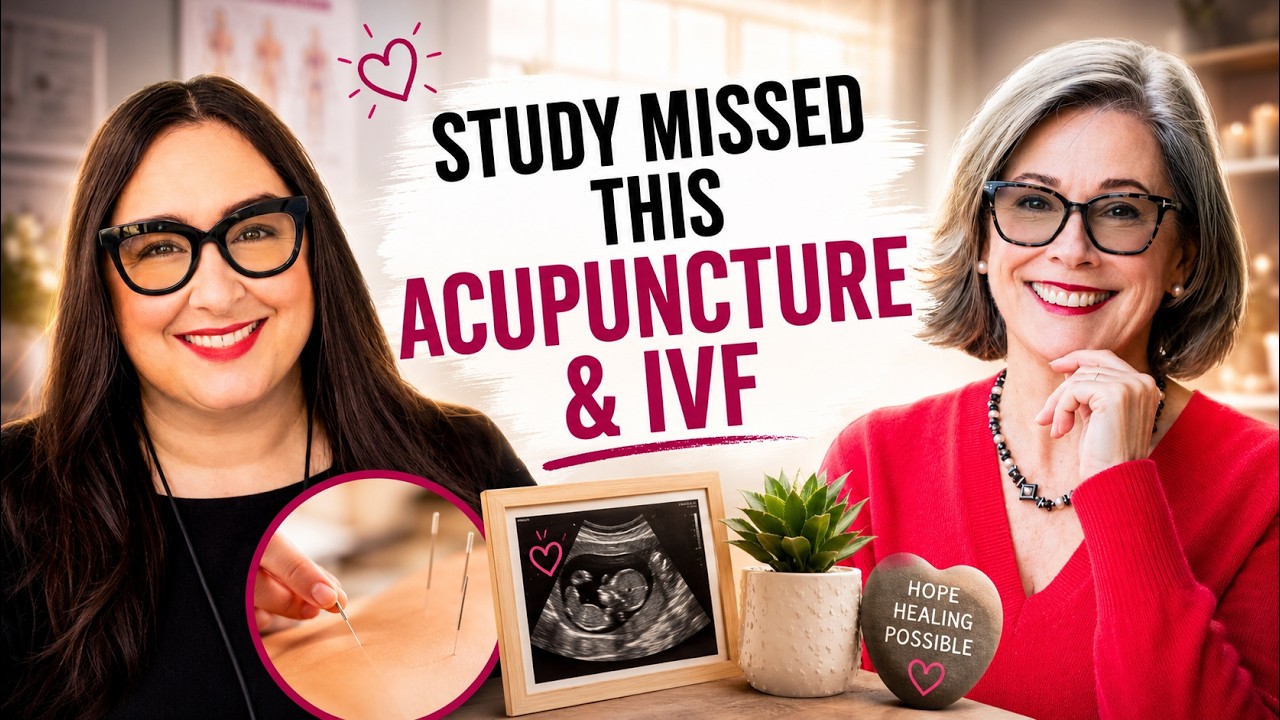
Acupuncture & IVF Research with Dr. Lee Hullender Rubin and Dr. Susan Fox
Key Takeaways
A recent review found that acupuncture used as an IVF add-on did not significantly improve live birth outcomes, but many included studies evaluated only one or two treatments around embryo transfer.
Day-of-transfer acupuncture does not represent the way fertility acupuncture is typically practiced as part of a longer, individualized course of care.
Treatment dose and timing may matter. Observational research discussed in the article found that 12–15 sessions, including transfer-day treatment, were associated with more live births and fewer biochemical pregnancies.
Much of the older research focused on fresh embryo transfers, making it harder to apply those findings directly to modern frozen embryo transfer cycles and genetically tested embryos.
Acupuncture during IVF may also support anxiety, sleep, digestion, nervous system regulation, blood flow, and the emotional experience of treatment, even when live birth is the primary outcome being studied.
A recent study on whether IVF “add-ons” work has created a lot of conversation in the fertility world. The paper reviewed several common IVF add-ons and concluded that acupuncture did not show a significant effect on live birth outcomes for people undergoing IVF.
That kind of headline can be misleading.
One or two acupuncture sessions on the day of embryo transfer does not reflect how acupuncture is used currently in clinical fertility care.
That distinction matters. Acupuncture for fertility, whether trying to conceive naturally or undergoing IVF, is not practiced as a one-time procedure. It is part of a whole systems plan that supports the nervous system, blood flow, digestion, sleep, inflammation, and the emotional toll of IVF.
The Study Asked a Narrow Question
The study focused on whether acupuncture improved live birth outcomes when used as an IVF add-on. That is a valid question. Live birth is the outcome every fertility patient ultimately wants.
But a valid question is nonetheless too narrow to capture the whole picture.
Many acupuncture studies that were reviewed in the meta-analysis used only one or two sessions on the day of embryo transfer. From a clinical perspective, that is not a full dose of acupuncture. It is closer to asking for one or two doses of stimulation medication to carry the entire weight of a treatment plan.
Dr. Lee Hullander Rubin explains that this is one reason the results need context. If the research only studies a small dose, it cannot tell us much about a more complete course of care.
The Cumulative Effect
A single treatment calms the nervous system. It helps reduce anxiety on the day of transfer. It improves the patient experience on that day.
Yet in fertility-focused acupuncture care, patients are often seen weekly or sometimes twice weekly. The timeline depends on the person and the goal. Support begins before egg retrieval, before embryo transfer, or during medication preparation. It is part of a whole systems-based treatment plan.
Dr. Lee’s own observational research found that 12 to 15 sessions that included day-of-transfer acupuncture were associated with more live births and fewer biochemical pregnancies. Dose matters.
The Research vs. Current IVF Practices
Another important limitation is that much of the older acupuncture and IVF research was done during a time when fresh embryo transfers were more common. If most of the available studies were built around fresh transfers, it becomes harder to apply those findings to modern IVF.
The clinical landscape has changed. Most clinics now use frozen embryo transfers with genetically tested embryos. Frozen transfer cycles involve different timing and different medication patterns. They also involve different needs from a Chinese medicine perspective.
This does not make the older research useless. It means we need more rigorous research that reflects how acupuncture for IVF is practiced today.
Sham Acupuncture Is Not a Placebo
Research on acupuncture often uses sham acupuncture as a control. That sounds simple, but it is not.
In drug trials, a placebo pill is inactive. In acupuncture research, sham needling has an effect on the body, as light touch or shallow needling activates physiological responses. This makes acupuncture trials difficult to design. If the control treatment has its own effect, the difference between the real treatment and the control can become harder to measure.
Acupuncture Support in IVF
Of course, live birth is the ultimate goal. However, it is not the only impact that matters during IVF.
IVF patients also carry a heavy emotional burden. Medications can affect sleep, mood, digestion, and nervous system regulation. Day of embryo transfer can be very stressful. And the waiting period can be extremely difficult. Acupuncture supports these parts of the process. It reduces anxiety and gives the patient a sense of support during a path that can feel overwhelming.
Day-of-Transfer Acupuncture is Insufficient
Early studies in the 1990s on day-of-transfer acupuncture were promoted as a quick way to support IVF. Yet it should be used as part of a larger care plan. The most meaningful work occurs in the weeks before retrieval and transfer, when acupuncture supports the nervous system, increases blood flow to the pelvic organs, and improves sleep, digestion, and nervous system regulation.
The timing after transfer also matters. If a patient has to leave the clinic, drive across town, rush into another office, and receive treatment in a stressful setting, the benefit is lost.
Whole Systems Chinese Medicine Is More Than Needles
A skilled fertility acupuncturist is not only placing needles. Whole-Systems Traditional Chinese Medicine includes nutrition, proper supplementation, lifestyle guidance, sleep support, digestive support, cycle education, and collaboration with the medical care team.
IVF does not happen in isolation. Medications can affect digestion. Stress can affect sleep. Hormonal changes can affect mood. The body needs support in more than one area.
This is where individualized care becomes important. A patient with diminished ovarian reserve needs different support than a patient with endometriosis. A patient with recurrent pregnancy loss needs a different approach than a patient using IVF due to male factor infertility.
Personalization is what makes it clinical care.
When to Start Acupuncture Before IVF
There is no single research-backed answer for the perfect number of sessions. Clinical experience and observational research suggest that starting earlier offers more benefits.
Six to eight weeks before retrieval or transfer is what fertility acupuncturists have found to be most helpful. Twelve weeks or more offers more time for better support. Some patients need weekly care. Others need more frequent care. The best plan depends on the person, the IVF timeline, and the reasons they are pursuing treatment.
That said, if you’re on a short timeline, it is still worth starting, for any support is better than none. For patients who cannot attend frequent appointments, a hybrid approach is also possible. This includes in-office acupuncture along with transcutaneous electrical acupoint stimulation (TEAS) when appropriate.
Choosing the Right Practitioner
Fertility acupuncture is a specialized area. Patients should look for a practitioner who understands reproductive medicine and IVF.
A Fellow of the Acupuncture and TCM Board of Reproductive Medicine has earned credentials that show that the practitioner is knowledgeable in reproductive medicine. Of course, ABORM certification is not a requirement; someone could be highly experienced in fertility care without that credential. The key is finding someone who understands IVF timing, fertility medications, transfer protocols, and can communicate with the broader care team.
Ask Better Questions About the Evidence
When studying research on acupuncture and IVF, a better discussion asks what was studied, how much treatment was given, whether the research reflects current IVF practice, and what outcomes were measured.
Evidence-informed care honors research without ignoring clinical reality. It also means giving patients enough context to make informed choices.
Build Support Before the Transfer
If you are preparing for IVF, acupuncture is worth discussing as part of your support plan. Start early if you can. Ask whether your practitioner has experience with fertility and IVF. Ask how much treatment best supports the entire IVF process, including but not exclusive to the transfer day.
At Health Youniversity, we believe fertility care should be informed, collaborative, and grounded in the whole person. IVF is a physical and emotional journey that deserves support before, during, and after treatment.
If a headline made you question whether acupuncture has value, take a closer look before deciding.
Frequently Asked Questions - FAQs
Does acupuncture improve IVF live birth rates?
The recent study discussed in the article found no significant improvement in live birth outcomes when acupuncture was evaluated as an IVF add-on. However, many of the reviewed studies used only one or two treatments around embryo transfer, so the findings may not represent a longer course of fertility acupuncture.
The article also cites observational research in which 12–15 sessions, including transfer-day acupuncture, were associated with more live births and fewer biochemical pregnancies. Because this was observational research, it shows an association rather than proving that acupuncture caused the difference.
Is acupuncture on embryo transfer day enough?
According to the article, one or two sessions on transfer day should not be considered a complete fertility acupuncture plan. Transfer-day treatment may help reduce anxiety and support the patient experience, but the broader work often begins several weeks before retrieval or transfer.
When should acupuncture begin before IVF?
The article suggests that beginning six to eight weeks before egg retrieval or embryo transfer may be helpful. Starting 12 weeks or more in advance may allow additional time to support sleep, digestion, stress regulation, circulation, and overall health.
There is no single research-backed number of sessions that is appropriate for everyone, so timing should be individualized.
Why might older acupuncture studies not reflect modern IVF?
Much of the earlier research was conducted when fresh embryo transfers were more common. Many clinics now use frozen embryo transfers and genetically tested embryos, which involve different medication protocols, timing, and clinical considerations.
The article argues that newer research should better reflect how IVF and fertility acupuncture are currently practiced.
Is sham acupuncture a true placebo?
Not necessarily. Unlike an inactive placebo pill, sham acupuncture may involve light touch or shallow needling that still activates physiological responses.
Because the control treatment may have an effect of its own, the difference between sham and traditional acupuncture can be more difficult to measure.
What other benefits may acupuncture provide during IVF?
The article explains that acupuncture may help support:
Anxiety and emotional stress
Sleep quality
Digestion
Nervous system regulation
Pelvic blood flow
Mood during fertility medications
The overall experience of embryo transfer and the waiting period
These outcomes are meaningful even though they are different from proving an increase in live birth rates.
What is Whole-Systems Traditional Chinese Medicine?
Whole-Systems Traditional Chinese Medicine involves more than acupuncture needles. It may include nutrition, appropriate supplementation, sleep support, digestive care, lifestyle guidance, cycle education, emotional support, and collaboration with the patient’s fertility team.
Care is personalized according to the patient’s diagnosis, symptoms, IVF protocol, and treatment goals.
Does every IVF patient receive the same acupuncture plan?
No. The article emphasizes individualized care. Someone with diminished ovarian reserve may need a different approach from someone with endometriosis, recurrent pregnancy loss, or male factor infertility.
Frequency, timing, techniques, and supportive recommendations should reflect the patient’s specific circumstances.
Can acupuncture still help when IVF is starting soon?
The article states that some support may still be worthwhile even when the timeline is short. Patients who cannot attend frequent appointments may also discuss a hybrid approach that combines in-office acupuncture with transcutaneous electrical acupoint stimulation, or TEAS, when appropriate.
How should someone choose a fertility acupuncturist?
Look for a practitioner who understands reproductive medicine, fertility medications, IVF timing, egg retrieval, transfer protocols, and communication with fertility clinics.
Certification through the Acupuncture and TCM Board of Reproductive Medicine can demonstrate specialized knowledge, although the article notes that an experienced practitioner may still be qualified without that credential.
Frequently Asked Questions
Does acupuncture improve IVF live birth rates?
The recent study discussed in the article found no significant improvement in live birth outcomes when acupuncture was evaluated as an IVF add-on. However, many of the reviewed studies used only one or two treatments around embryo transfer, so the findings may not represent a longer course of fertility acupuncture.
The article also cites observational research in which 12–15 sessions, including transfer-day acupuncture, were associated with more live births and fewer biochemical pregnancies. Because this was observational research, it shows an association rather than proving that acupuncture caused the difference.
Is acupuncture on embryo transfer day enough?
According to the article, one or two sessions on transfer day should not be considered a complete fertility acupuncture plan. Transfer-day treatment may help reduce anxiety and support the patient experience, but the broader work often begins several weeks before retrieval or transfer.
When should acupuncture begin before IVF?
The article suggests that beginning six to eight weeks before egg retrieval or embryo transfer may be helpful. Starting 12 weeks or more in advance may allow additional time to support sleep, digestion, stress regulation, circulation, and overall health.
There is no single research-backed number of sessions that is appropriate for everyone, so timing should be individualized.
Why might older acupuncture studies not reflect modern IVF?
Much of the earlier research was conducted when fresh embryo transfers were more common. Many clinics now use frozen embryo transfers and genetically tested embryos, which involve different medication protocols, timing, and clinical considerations.
The article argues that newer research should better reflect how IVF and fertility acupuncture are currently practiced.
What other benefits may acupuncture provide during IVF?
The article explains that acupuncture may help support:
Anxiety and emotional stress
Sleep quality
Digestion
Nervous system regulation
Pelvic blood flow
Mood during fertility medications
The overall experience of embryo transfer and the waiting period
These outcomes are meaningful even though they are different from proving an increase in live birth rates.
Does every IVF patient receive the same acupuncture plan?
No. The article emphasizes individualized care. Someone with diminished ovarian reserve may need a different approach from someone with endometriosis, recurrent pregnancy loss, or male factor infertility.
Frequency, timing, techniques, and supportive recommendations should reflect the patient’s specific circumstances.
Can acupuncture still help when IVF is starting soon?
The article states that some support may still be worthwhile even when the timeline is short. Patients who cannot attend frequent appointments may also discuss a hybrid approach that combines in-office acupuncture with transcutaneous electrical acupoint stimulation, or TEAS, when appropriate.
How should someone choose a fertility acupuncturist?
Look for a practitioner who understands reproductive medicine, fertility medications, IVF timing, egg retrieval, transfer protocols, and communication with fertility clinics.
Certification through the Acupuncture and TCM Board of Reproductive Medicine can demonstrate specialized knowledge, although the article notes that an experienced practitioner may still be qualified without that credential.
Check out all of our episodes on the following platforms:
Dr. Lee Hullender Rubin is an internationally recognized, award-winning doctor of acupuncture and a leader in the field of integrative reproductive medicine. As the founder of Rosefinch Health, Dr. Lee blends compassionate care with over two decades of clinical experience specializing in fertility, IVF support, pelvic and vulvovaginal pain, and cancer-related support. She relishes the opportunity to work collaboratively with her patients and their care teams to provide individualized, evidence-informed care that affirms and empowers.
In addition to her work as a clinician, Dr. Lee is also an accomplished teacher and researcher of acupuncture and integrative East Asian Medicine, having authored more than 30 publications in journals including Reproductive BioMedicine Online, Fertility and Sterility, Medical Acupuncture, and the Journal of Integrative and Complementary Medicine. Her work is indexed on Google Scholar, PubMed, and ORCID. She is a featured medical expert on Roon, a physician knowledge platform curated by experts from Harvard, Stanford, and UCSF. She recently founded Rosefinch Academy, a continuing education hub for acupuncturists to learn how acupuncture and integrative medicine can support fertility.
Website: https://www.rosefinchhealth.com/
Want to know more about the latest IVF acupuncture study? Read the full article here: https://www.rosefinchhealth.com/blog/acupuncture-ivf-major-new-study-fuller-story
Medical Disclaimer:
By listening to the Health Youniversity podcast, you agree not to use this podcast as medical advice to treat any medical condition for yourself or others. Consult your healthcare provider for any medical issues you may have. This entire disclaimer also pertains to any guests or contributors to any Health Youniversity podcast.