
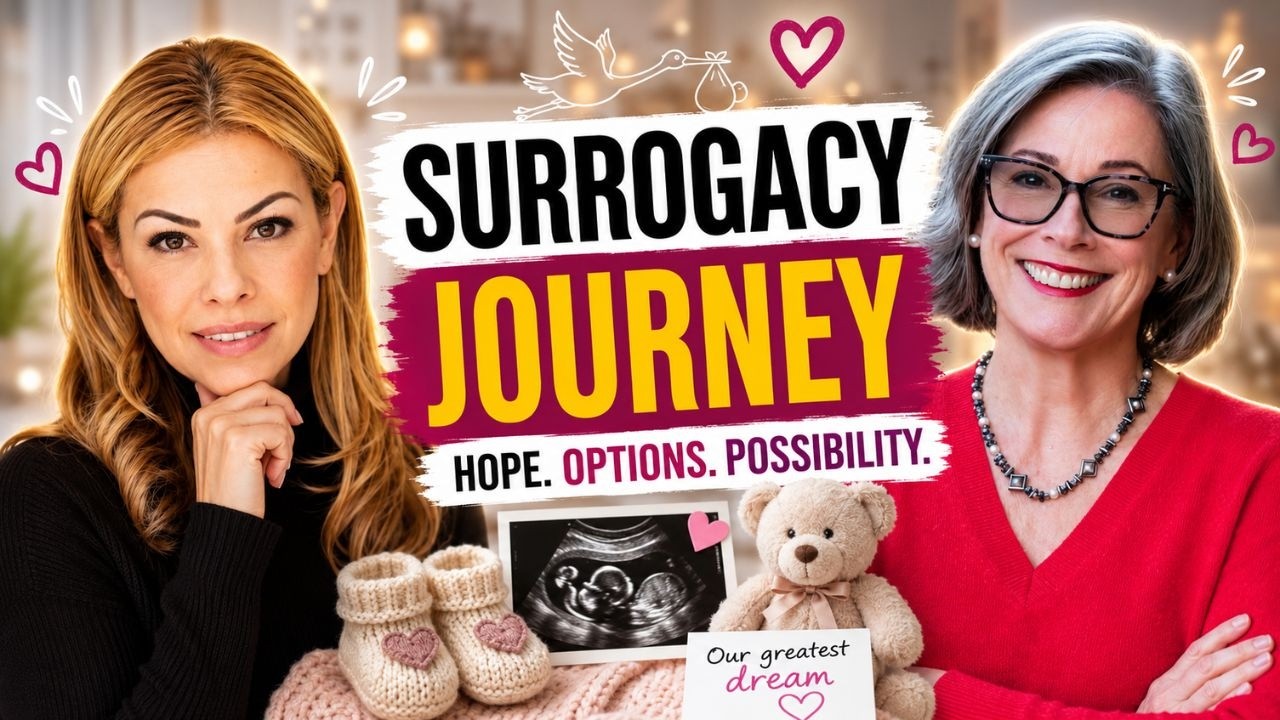
Third-Party Reproduction, Mental Health, and the Courage to Grow Your Family Your Way
Fertility is often thought of as mere procedures and protocols. Egg retrievals, embryos, donor sperm, surrogacy contracts, medical tests, and transfer timelines can become front-burner focus. Yet behind every clinical step is a person trying to make sense of hope, grief, identity, relationships, and the dream of family.
This conversation brings attention to a part of fertility care that is often overlooked: the emotional and psychological experience of third-party reproduction. Donor conception, gestational surrogacy, male factor infertility, pregnancy loss, and independent motherhood all require more than medical coordination. They require compassionate support, legal protection, community, and mental health care that understands the unique weight of this journey.
A non-traditional path to family means the care around it needs to be more thoughtful.
Child-Free and Childless Are Not the Same
One of the most powerful distinctions in this conversation is the difference between being child-free and being childless. Being child-free can be an intentional choice. Being childless often means a choice has not been available in the way someone hoped.
That distinction matters because language can wound. Casual questions such as “Do you have kids?” or “Is it just you two?” may seem harmless to the person asking. For someone in the middle of infertility or loss, those words can pierce the soul.
The word “just” can be especially diminishing. It can make a family of two feel incomplete. It can make a parent with one child feel as though something is missing. It can make someone without children feel exposed in a place they did not choose to be vulnerable.
Part of creating a more supportive fertility culture is learning to ask better questions. It also means accepting that some questions do not need to be answered. People are allowed to protect their stories.
Male Factor Infertility Needs Earlier Attention
Male factor infertility is a significant part of the fertility conversation. Yet many couples still begin with the woman’s reproductive system as the primary focus. In this story, male factor infertility was discovered after years had already passed. By then, egg quantity and options had changed.
Testing matters. Semen analysis is an important step that needs to go beyond basic parameters. Morphology and DNA fragmentation can reveal problems that simpler testing may miss.
The deeper lesson is that fertility testing should not be delayed or one-sided. Both partners need early evaluation. Waiting too long can cost time, options, and emotional energy.
When fertility struggles are shared, the testing and support should be shared too.
Donor Conception Is More Than a Medical Decision
Choosing donor sperm or donor eggs can bring unexpected questions. How do you choose a donor? What matters most? How do you talk about ancestry, religion, personality, health history, and identity? How will you explain this to your family? How will you explain it to the future child?
The process can feel strangely clinical and deeply emotional at the same time. Searching donor databases may feel impersonal. The decision itself is anything but impersonal.
Donor conception requires emotional preparation and honesty. Families benefit when they begin thinking early about how they will talk with their child in age-appropriate ways. Children do not need the entire story at once. They need language that grows with them. A simple explanation can be enough for a young child. “My body needed help, and another person helped bring you here” may be all that is needed at that moment. As children grow, the conversation can grow with them.
Surrogacy Requires Support Beyond the Contract
Gestational surrogacy is often described through legal documents, agency steps, matching, medical coordination, and transfer dates. All of those matter. They protect everyone involved. Yet the intended parent’s emotional experience also matters.
Surrogacy can include grief around not carrying. fear after previous loss, hesitancy to prepare a nursery, install a car seat, or fully believe the baby is coming. These reactions are signs of a nervous system that has already endured uncertainty.
Intended parents need support that understands this landscape. Reproductive mental health has its own language and nuance. People navigating donor conception, IVF, surrogacy, pregnancy loss, or complex family building often benefit from someone trained in assisted reproductive technology and its emotional impact.
Legal Protection Is Part of Family Care
Legal planning can feel intimidating. In third-party reproduction, however, legal support is not optional; it is an integral part of caring for the future child and family.
Intended parents need representation. Gestational carriers need representation. Donor agreements and parentage questions need to be addressed with care.
This is about protecting adults and the future child. Clear legal planning helps prevent confusion, supports stability, and creates a structure that allows the family to move forward with more confidence.
The transcript also highlights the role of judicial parentage when a non-biological parent becomes part of a child’s life. These decisions may bring up difficult questions. They also offer a chance to create lasting security for the child.
Fertility Care Should Include Mental Health Care
Infertility can be isolating. Third-party reproduction can add another layer of isolation because fewer people may understand the process. Mental health support belongs in the fertility process from the beginning. Support can come from a licensed therapist, a psychiatrist trained in reproductive mental health, a support group, an advocacy organization, or a trusted community. The key is having somewhere to bring the fear, grief, confusion, anger, and hope.
Community can be especially healing. Hearing from others who have walked through infertility can shift feelings of isolation and shame. Organizations such as Resolve can offer advocacy, education, and connection for people building families through many different paths.
Preparing the Body Still Matters
Even when donor conception, IVF, or surrogacy is part of the path, whole-body health still matters. Ovarian reserve is not the whole picture. Egg quality is a reflection of whole health. Stress, sleep, nutrition, environmental exposure, and toxic load all belong in the conversation. It’s crucial that a mother-to-be, whether gestational carrier or the intended mamma, reduces inflammatory exposures and supports her body before and during treatment. This includes better nutrition, lower toxin exposure, and care that supports the nervous system.
These are things people can do while they pursue medical care. These steps create the health of the ovary, follicle, egg, sperm, embryo, fetus and baby.
Families Do Not Have to Look One Way
A family may not look like the traditional picture many people grew up expecting. Yet they are whole and complete.
Independent motherhood deserves practical and emotional support. Parenting through donor conception or surrogacy may require more explanation to others, but only as the parent sees fit to share. It may also require more confidence in choosing not to answer invasive questions.
Children need simple truth, delivered with calm and love. They can often receive the story in increments that they can understand, using language is clear and age-appropriate.
Building Resilience Through Community and Advocacy
Advocacy is deeply healing. Speaking with lawmakers, supporting family-building legislation, joining a community, or sharing a story can transform isolation into purpose.
Advocacy can also happen in small ways. It can look like correcting harmful language or sharing a resource.
Make Support Part of the Plan
Third-party reproduction is not only a medical path. It is an emotional, legal, relational, and identity-shaping experience. Donor conception and surrogacy can create beautiful families. They can also raise questions that deserve careful attention.
If you are considering donor sperm, donor eggs, gestational surrogacy, IVF, independent parenthood, or legal parentage, build support early. Learn your health picture. Ask about male factor testing. Find professionals who understand assisted reproduction. Seek legal guidance before decisions become urgent. Look for community before isolation may set in.
At Health Youniversity, we believe every family-building path deserves dignity, clarity, and care. Families do not have to arrive in one traditional way to be complete. They need the right support, the right protection, and the courage to tell the story with love.
Support your fertility journey with Preconception Plan at Health Youniversity.
Check out all of our episodes on the following platforms:
Leslie Lopez, an independent mother and host of the Mothers in Arms podcast. Which core mission is in addressing the emotional and psychological dimensions of the reproductive journey.
After six years working with California Fertility Partners, Leslie navigated male factor infertility, stillbirth, egg freezing, and gestational surrogacy before having her biological daughter as a solo parent.
She's passionate about destigmatizing third-party reproduction and helping people understand that the fertility journey is as much about mental resilience as it is about treatment protocols.
Mother in Arms Podcast : https://podcasts.apple.com/us/podcast/mothers-in-arms/id1768849257
Donor Conceived Community: https://www.donorconceivedcommunity.org/
US Donor Conceived Council: https://www.usdcc.org/
IVF and Surrogacy Calculator (Tsong Law): https://www.tsonglaw.com/ivf-calculator
Gift of Surrogacy Foundation: https://www.giftofsurrogacyfoundation.org/
Carrot Fertility: https://www.get-carrot.com/
Embrya Health: https://embrahealth.com/
Resolve Support Groups: https://resolve.org/get-help/support-groups/
Medical Disclaimer:
By listening to the Health Youniversity podcast, you agree not to use this podcast as medical advice to treat any medical condition for yourself or others. Consult your healthcare provider for any medical issues you may have. This entire disclaimer also pertains to any guests or contributors to any Health Youniversity podcast.