

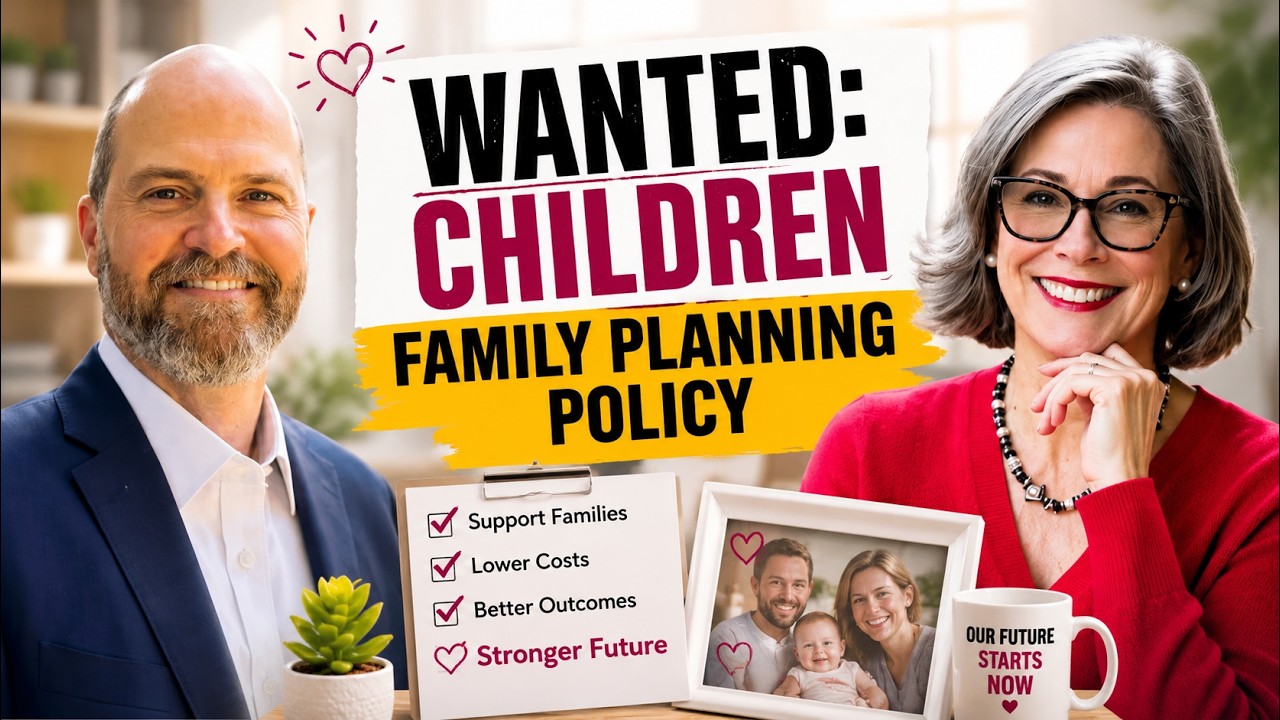
Wanting Children: Family Planning Policies with Dr. Susan Fox and Dr. Len Lopoo
Key Takeaways
Family planning includes both preventing and pursuing pregnancy. Policies should support people who do not want children as well as those who want children but need help building a family.
Fertility decisions are shaped by more than personal choice. Insurance coverage, workplace policies, paid leave, childcare, public programs, and access to medical care all influence when and whether people become parents.
Infertility care remains less supported than contraception and pregnancy prevention. Even diagnostic testing, ovulation medication, and early specialist care may not be covered in many states.
Insurance waiting requirements can delay medically appropriate fertility care. Requiring patients to try for 6–12 months before receiving support may be especially harmful when age or progressive reproductive health conditions are involved.
IVF and genetic testing should not be available only to wealthy families. Broader access could reduce financial inequality and give more people meaningful choices about family building and reproductive health.
Fertility is often talked about as a couple trying to conceive, a patient preparing for IVF, a woman tracking ovulation, or a doctor reviewing labs.
But there is a larger system around every family-building decision.
Policies shape whether people can access fertility care. Insurance rules shape how long they have to wait. Workplace support shapes when people feel ready to become parents. Public programs shape whether people can prevent, postpone, or pursue pregnancy.
In his book, Wanting Children: Family Planning Policies and the Engineering of America’s Population, Dr. Leonard M. Lopoo explores how family planning policy has shaped the way people build families in the United States.
His research boils down to one question:. Are we helping people have children when they want them?
What Is Pronatalism?
Pronatalism is the idea that policies can encourage people to have more children, and the idea has become more visible as birth rates decline in the United States and other countries. Europe and parts of Asia have faced this concern for years. In the United States, while immigration has helped keep population levels more stable, fertility rates have still been declining over time.
The question is not only whether a society wants more births. The better question is what kind of support helps people who want children.
Policies should both help people who want children as much as they support people who do not want children, each with the resources they need.
That is where the word “wanting” becomes important.
Why Wanted Children Matter
Wanted children are children born into circumstances where parents are ready to welcome them. That readiness encompasses emotional, financial, education, career, partnership, and health.
Children do better when parents are prepared and supported. They are more likely to have better educational outcomes and less likely to experience poverty or need long-term government support.
This is why family planning must not only mean contraception; it must also mean helping people who are struggling with infertility. As much as people need support to avoid pregnancy when they are not ready, they also need support when they are ready and need help.
Fertility Care Has Been Left Out
Many public family planning programs have focused on contraception and pregnancy prevention. That support is important. It has helped many people make decisions about their bodies and futures.
But infertility care has not been supported in the same way.
In many states, there is no mandate for private insurance to cover even lower-cost fertility support. IVF is often discussed as the major expense, but the gap can simply be medication to support ovulation, diagnostic testing or time with a specialist before beginning IVF.
For military families, this can feel especially unfair. Service members spend their most fertile years serving the country. When they are ready to build a family, fertility support could be unavailable in the way they need.
Waiting Can Make the Problem Worse
Some insurance rules require proof of infertility before care is covered. That could mean twelve months of unprotected intercourse without pregnancy. That delay can be painful. It can also be medically unhelpful.
Because age matters in fertility. Certain conditions worsen over time. Endometriosis, PMOS, inflammation, and other reproductive health concerns do not pause while a patient waits to qualify for care.
A delayed diagnosis increases physical suffering and may add future medical costs. What begins as a fertility issue can become a broader health concern. This is why earlier support is not only compassionate; it is practical.
Family Policy Is Fertility Policy
Many policies affect fertility even when they are not labeled that way.
Childcare support affects family size decisions. Paid leave affects when people feel ready to have children. Health insurance affects whether treatment is possible. Early childhood education can reduce the pressure families feel after a child is born.
Policymakers often do not consider the fertility impact of these decisions. But every one of these policies affects decisions on family planning.
A more thoughtful system would ask how policy supports the whole family-building process.
IVF Access Should Not Depend on Wealth
Advanced reproductive technologies are often available to people with more financial resources. That includes IVF, genetic testing, and other tools that could improve the chance of a healthy pregnancy.
The ability to afford the upfront costs of medical technologies can make IVF cost-prohibitive, creating a financial barrier that keeps many people from care.
Dr. Lopoo argues that broader access could help reduce costs over time. When technologies become more available at scale, innovation can grow and costs can lower.
Pronatalism in Other Countries
Also facing fertility decline, other countries have created more generous family support systems.
Policies vary by country. France has long offered stronger public support for family and fertility. Scandinavian countries also provide more structured support. Estonia was highlighted as a surprising example because of its generous IVF access and lack of a long waiting list.
These countries have treated fertility support as part of public policy and demonstrate that broader support is possible.
Genetic Testing Raises New Questions
The future of fertility care also includes questions about genetic testing.
Many patients choose genetic testing during IVF to reduce the risk of pregnancy loss or serious genetic conditions. For many families, this is a deeply practical and loving decision. They want to transfer an embryo that has the best chance of becoming a healthy child.
But if genetic testing is only available to people with wealth, the gap grows to those who can gain access to information that could shape health outcomes.
Genetic testing should be an available option, as is the right to decline it for personal, religious, or ethical reasons. However, the concern is access. It should not be available only to the families who can afford it.
Start Thinking Bigger About Fertility Care
Fertility care does not begin and end inside a clinic. It is shaped by public policy, insurance coverage, workplace support, childcare access, medical timelines, and the cost of technology.
If we want healthier families, we need to ask better questions. Are people able to prevent pregnancy when they are not ready? Are people able to pursue pregnancy when they deeply want a child? Are patients getting help early enough? Are fertility technologies available to everyone? Are policies protecting choice or limiting it?
At Health Youniversity, we believe family-building support should honor the whole person and the whole system around them. Fertility is personal, but it is also public. The policies we create today shape the families of tomorrow.
If this conversation opens your eyes, share it with someone who needs a wider view of fertility care. The more we understand the system, the better we can advocate for families who want children.
Frequently Asked Questions - FAQs
What is pronatalism?
Pronatalism is the idea that governments or public policies can encourage people to have more children. It has received greater attention as birth rates have declined in the United States, Europe, and parts of Asia.
The article presents a broader version of pronatalism that focuses on helping people have children when they want them rather than simply trying to increase the number of births.
What does “wanting children” mean in family policy?
“Wanting children” refers to supporting people in having children under circumstances in which they feel prepared to welcome them. That readiness may include emotional health, financial stability, education, career plans, relationships, and physical health.
It also recognizes that reproductive freedom includes both the ability to avoid an unwanted pregnancy and the ability to seek help when a wanted pregnancy is difficult to achieve.
How do public policies affect fertility decisions?
Public policies can influence whether people feel financially, professionally, and emotionally ready to have children. Health insurance, paid parental leave, childcare costs, workplace flexibility, early childhood education, and fertility treatment coverage can all affect the timing and size of a family.
These policies may influence fertility even when they are not formally described as fertility policies.
Why has infertility care often been left out of family planning?
Many public family-planning programs have traditionally focused on contraception and pregnancy prevention. While that support remains important, infertility testing and treatment have not received the same level of attention or funding.
As a result, patients may struggle to obtain coverage for diagnostic testing, ovulation medication, specialist consultations, IVF, or other forms of fertility care.
Why can fertility-care waiting requirements be harmful?
Some insurance policies require patients to demonstrate that they have been trying to conceive for a specific period before fertility care is covered. This may mean waiting 6–12 months without pregnancy.
The article argues that these delays may be medically unhelpful because fertility changes with age and some reproductive health conditions can worsen over time. Earlier evaluation may reduce suffering, provide answers sooner, and potentially prevent more complex medical needs later.
How do paid leave and childcare affect birth rates?
Paid leave and affordable childcare can reduce the financial and career pressure associated with having children. When parents know they will have time to recover, care for a newborn, and return to work without losing financial stability, they may feel more prepared to start or expand a family.
These policies do not guarantee that people will have more children, but they can remove barriers that influence family-planning decisions.
Why is IVF access considered an equity issue?
IVF, genetic testing, and other advanced reproductive technologies often require substantial upfront payment. This means that access may depend heavily on income, savings, insurance coverage, or employer benefits.
The article argues that people should not be excluded from fertility care simply because they cannot afford the initial cost. Broader coverage could give more families access while potentially encouraging innovation and reducing costs over time.
How do other countries support fertility and family building?
The article points to France, Scandinavian countries, and Estonia as examples of countries offering stronger public family or fertility support. Estonia is highlighted for providing generous IVF access without a long waiting list.
Policies differ by country, but these examples demonstrate that fertility treatment and family support can be incorporated into broader public policy.
What concerns does genetic testing raise in fertility care?
Genetic testing during IVF may help families assess embryo health and reduce the risk of certain genetic conditions or pregnancy loss. However, it also raises questions about cost, access, personal beliefs, and reproductive choice.
The article supports making testing available without requiring it. Patients should have both the opportunity to use genetic testing and the right to decline it for ethical, religious, personal, or financial reasons.
Check out all of our episodes on the following platforms:
Leonard M. Lopoo is the Paul Volcker Chair in Behavioral Economics and Associate Dean for Public and International Affairs Programs at Syracuse University’s Maxwell School.
Dr. Lopoo received his Ph.D. from the University of Chicago in 2001 and was a postdoctoral fellow at the School of Public and International Affairs at Princeton University from 2001-2003 before joining the Maxwell School.
He is a nationally recognized expert on family policies, particularly as they relate to fertility, marriage, and maternal employment.
He has written over fifty academic articles and reports on these topics and is the author of the recently published book Wanting Children: Family Planning Policies and the Engineering of America’s Population from the University of Chicago Press.
LinkedIn: https://www.linkedin.com/in/leonard-lopoo-8184582a5/
Medical Disclaimer:
By listening to the Health Youniversity podcast, you agree not to use this podcast as medical advice to treat any medical condition for yourself or others. Consult your healthcare provider for any medical issues you may have. This entire disclaimer also pertains to any guests or contributors to any Health Youniversity podcast.