

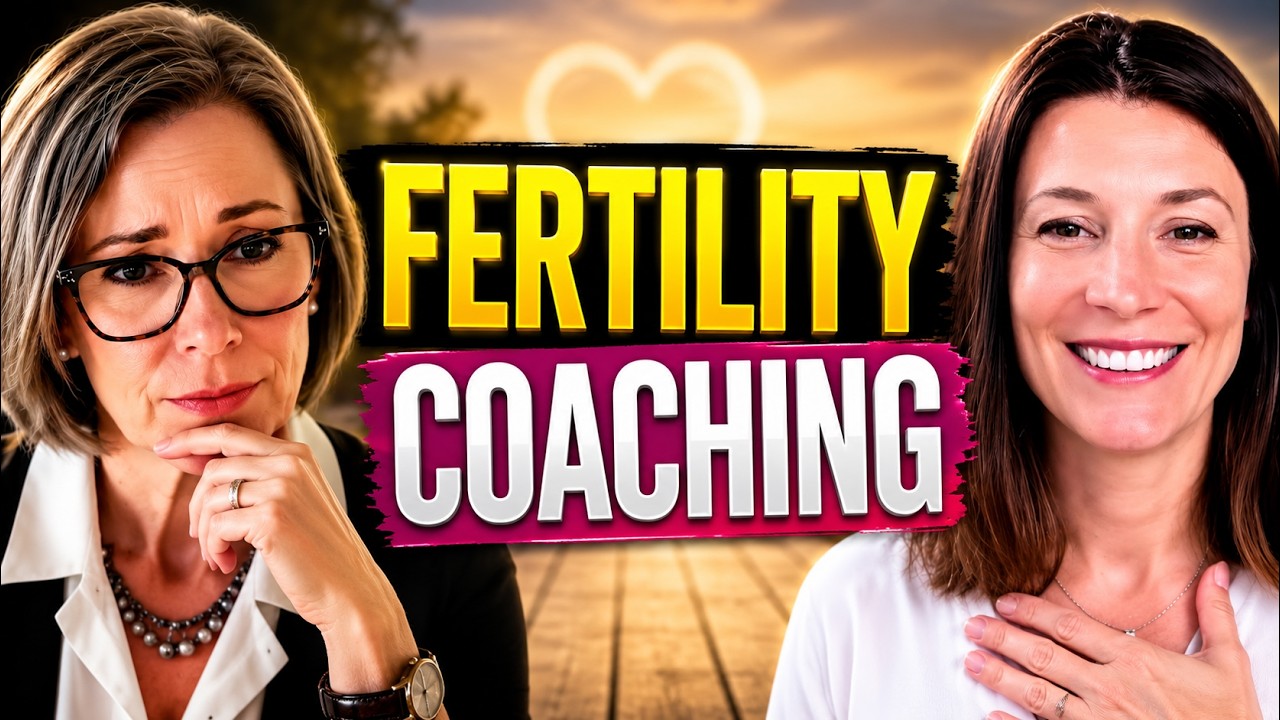
Prepare for Conception with Whole Body Fertility Coaching at WOVA | Dr. Susan Fox and Gabie Peytchev
Key Takeaways
Whole-body fertility coaching looks beyond reproductive organs and lab results. It considers nutrition, sleep, stress, inflammation, metabolic health, environmental exposures, emotional well-being, egg health, and sperm health alongside conventional fertility care.
Fertility preparation should involve both partners. The article emphasizes that male factor infertility is involved in a significant share of fertility cases and that sperm health can be influenced by nutrition, oxidative stress, heat exposure, environmental factors, and lifestyle habits.
The months before conception or IVF are an important preparation window. Egg development takes approximately three to four months, while sperm develops over roughly 74 days, creating time to address modifiable health and lifestyle factors before treatment.
Food should come before indiscriminate supplementation. Instead of taking supplements based on trends or recommendations from others, the article encourages a “test, don’t guess” approach so supplementation reflects individual needs.
Whole-body support and medical fertility treatment can happen together. WOVA and Health Youniversity use a “both/and” approach in which people can pursue IVF or other fertility treatments while also supporting nutrition, lifestyle, emotional health, environmental awareness, and overall well-being.
Whole-body fertility coaching is an integrative approach to preconception care that considers nutrition, sleep, stress, metabolic health, emotional well-being, environmental exposures, egg health, and sperm health alongside conventional fertility treatment. WOVA and Health Youniversity use this approach to help women and couples prepare before and during treatments such as IVF rather than waiting until a cycle fails. Because egg development takes approximately three to four months and sperm develops over roughly 74 days, the months before conception or fertility treatment can provide an opportunity to address modifiable lifestyle and health factors without replacing medical care.
Fertility care can sometimes begin too late in the process.
Many people wait until they have already been trying for months, sometimes years, before they seek guidance around what factors may be influencing their fertility. By that point, the next step often feels like a procedure: IUI, IVF, another test, another medication, another cycle.
Those tools can be necessary and incredibly valuable. But the health of the body that enters those procedures matters.
In this episode of Health Youniversity, the conversation centers on Whole Body Fertility Coaching with WOVA, an integrated fertility support platform designed to help women and couples approach the preconception journey with more clarity, support, and confidence. Rather than looking only at the ovaries, the uterus, or the lab values, WOVA’s approach brings together the physical, emotional, relational, lifestyle, and environmental pieces that influence whole-body fertility preparation. This resonates with Dr. Susan, for it’s the same pillars of health she provides in her online course, Preconception Plan at Health Youniveristy.
In each of these offerings, the goal is not to replace medical care, but to support the person moving through it.
Why Whole Body Fertility Support Matters
One of the most common frustrations in the fertility journey is receiving a diagnosis without a clear explanation of how to improve signs and symptoms.
An example is “unexplained infertility” — which offers no clear direction on how to reverse. There may be normal test results, yet pregnancy still is not happening. There may be a recommendation to move forward with IVF, but very little discussion about what can be done before that cycle begins.
Whole body fertility coaching exists in that space.
It asks a different set of questions: What is happening in the body as a whole? What lifestyle patterns may be affecting egg or sperm health? What environmental exposures are worth addressing? What emotional strain is the couple carrying? What does the person need in order to feel more supported, more informed, and less alone?
Fertility is not separate from whole-body health. Cholesterol, blood pressure, inflammation, stress, sleep, nutrition, oxidative stress, and environmental exposures all belong in the conversation.
The Missing Conversation Around Male Factor Fertility
Male factor infertility is present in 50% of cases, yet the woman’s body is asked to carry most of the burden of treatment.
This can feel especially frustrating when the sperm analysis shows significant concerns and next steps are IVF with ICSI (intracytoplasm sperm injection). While procedures may still be needed, male fertility deserves more attention and more specific guidance. For example, sperm health can be influenced by nutrition, oxidative stress, environmental toxins, smart technology habits, heat exposure, and lifestyle patterns. Because sperm has a development window of roughly 74 days, lifestyle choices made in the months before conception matter.
This is one of the reasons whole body fertility coaching is so important. It includes both partners in the preconception conversation and encourages couples to see fertility as shared, not isolated to one body.
Environmental Exposures and Smart Technology
The episode also highlights a modern fertility factor many people are not taught to consider: smart technology and environmental exposure.
Phones, laptops, and electromagnetic fields are part of daily life. Simple changes can reduce unnecessary exposure to the reproductive organs.
For sperm health, one immediate step is to stop carrying a phone in the front pocket. It may also be wise to avoid the back pocket and to keep laptops off the lap. Heat and electromagnetic field exposure can affect the reproductive area, and research continues to show concern around oxidative stress and DNA integrity.
Keeping phones out of sleeping areas, or at least putting them in airplane mode, helps minimize EMF exposure.
These shifts are simple, but they matter because fertility preparation is often built through consistent, practical changes.
The point is not fear.
The point is awareness.
Food First, Supplements Second
Another major theme in the conversation is the conundrum of using supplements without testing. It is common to hear that a supplement helped a friend, to see a recommendation online, or to feel that taking more must mean doing more. But more is not always better.
Whole body fertility support looks at what the body actually needs. Food should remain the foundation, with supplements used thoughtfully and appropriately when indicated. Testing can help clarify what is truly needed rather than relying on trends or assumptions.
This is especially important because fertility is not the time to throw everything at the wall and hope something sticks. The wrong supplement, or too many supplements, can sometimes work against the body’s needs.
The guiding principle is simple: test, don’t guess.
Preparing Before IVF or Fertility Treatment
One of the clearest messages in this episode is that whole body support should not be saved for after a failed cycle.
Many people wait until treatment does not work before they begin looking at nutrition, lifestyle, sperm health, environmental exposures, stress, and overall metabolic health. But that delay can cost valuable time and emotional energy.
Egg development takes approximately three to four months. Sperm development takes about 74 days. This means the months before conception or IVF are an opportunity to improve parameters.
Even if IVF is the next step, preparation can happen concurrently. Many clinics have a period of diagnostic testing - and sometimes specific interventions - before treatment begins. That window can be used to support the body more intentionally.
Whole Body Fertility Coaching as a Both/And Approach
WOVA’s and Health Youniversity’s approach reflect a “both/and” model.
You can pursue IVF and support whole-body health.
You can work with your medical team and receive coaching around lifestyle and emotional support.
You can use technology and make practical changes to reduce exposure.
You can take supplements and prioritize food as medicine.
* You can want answers quickly and prepare thoughtfully.*
This is the kind of integrated support many couples need: not a replacement for reproductive endocrinology, but a bridge between the medical process and the lived experience of trying to conceive.
A fertility journey is emotional, relational, financial, physical, and deeply personal - long before it becomes clinical.
Supporting the Future Child, Not Just the Pregnancy Test
Preconception care is not only about getting pregnant.
It is also about the health of the future child and the future parent. Nutrition, lifestyle, sperm health, egg health, environmental exposures, and emotional resilience can all influence the foundation being built before conception.
The goal is to support the healthiest possible environment for conception, pregnancy, the baby and postpartum mom.
Whole body fertility coaching helps shift the question from, “How do we get pregnant as quickly as possible?” to “How do we support the healthiest path forward?”
That is a more complete conversation.
Fertility care offers a meaningful space in which nutrition, movement, sleep, stress support, environmental awareness, sperm health, egg health, testing, coaching, emotional care, and informed decision-making are of equal value.
At Health Youniversity, we believe fertility support should help people feel less alone and more equipped to participate in their care. It’s the reason we designed the Preconception Plan, an online course that teaches how to improve one's whole health and fertile health. Whole Body Fertility Coaching with WOVA reflects that same principle: give people evidence-informed support, practical tools, and the clarity to prepare before and alongside medical treatment.
Because the months before conception matter.
And there is more that can be done than simply waiting.
Frequently Asked Questions - FAQs
What is whole-body fertility coaching?
Whole-body fertility coaching looks at reproductive health within the context of overall physical, emotional, lifestyle, relational, and environmental health.
Instead of focusing only on ovaries, sperm, hormones, or fertility procedures, it considers factors such as nutrition, sleep, stress, inflammation, environmental exposures, metabolic health, and emotional support.
What is WOVA Whole Body Fertility Coaching?
WOVA is described in the article as an integrative fertility support platform that helps women and couples navigate the trying-to-conceive journey with personalized coaching, education, and collaboration with licensed professionals.
Its purpose is to complement existing medical fertility care rather than replace it.
Can fertility coaching replace an OB-GYN or fertility specialist?
No. The article specifically presents whole-body fertility coaching as support that works alongside conventional medical care.
People can work with reproductive endocrinologists, undergo testing, pursue IVF, and receive fertility coaching at the same time.
Why should whole-body health matter when trying to conceive?
The article argues that reproductive health is connected to overall health.
Nutrition, sleep, inflammation, stress, cholesterol, blood pressure, oxidative stress, environmental exposures, and metabolic health may all belong in the broader preconception conversation.
Can whole-body fertility coaching help with unexplained infertility?
The article presents unexplained infertility as one situation where broader support may be helpful because standard testing may appear normal even though pregnancy has not occurred.
Coaching can help patients examine lifestyle, nutrition, sperm health, environmental exposures, stress, and other areas while continuing appropriate medical evaluation.
Why should male fertility be addressed earlier?
The article states that male factor infertility is involved in approximately 50% of fertility cases, yet treatment often focuses more heavily on the woman's body.
Evaluating and supporting sperm health earlier can help make fertility preparation a shared process rather than placing responsibility on one partner.
What lifestyle factors may influence sperm health?
The article highlights factors including:
Nutrition
Oxidative stress
Environmental toxins
Heat exposure
Smart technology habits
General lifestyle patterns
Because sperm develops over roughly 74 days, habits during the months before conception may be worth reviewing.
How long does sperm take to develop?
The article describes the sperm-development window as approximately 74 days.
This is one reason preconception preparation for the male partner may begin several months before trying to conceive or starting fertility treatment.
How long does egg development take?
The article states that egg development takes approximately three to four months.
This provides a potential preparation window before conception, egg retrieval, or IVF treatment.
Should I prepare my body before IVF?
According to the article, whole-body preparation can begin before and alongside IVF rather than waiting until after an unsuccessful cycle.
The period used for fertility testing and treatment planning may also provide time to address nutrition, sleep, stress, sperm health, environmental exposure, and other health factors.
Can I do IVF and whole-body fertility coaching at the same time?
Yes. This is a central idea in the article's “both/and” approach.
You can pursue IVF and support whole-body health, work with a medical team and receive lifestyle coaching, and use fertility technology while also making practical changes to your daily environment.
Should I take fertility supplements before trying to conceive?
The article cautions against taking supplements simply because they helped someone else or were recommended online.
Food is presented as the foundation, with supplements used thoughtfully when individual needs indicate them.
What does “test, don’t guess” mean in fertility preparation?
“Test, don’t guess” means using appropriate evaluation to understand what the body actually needs rather than automatically adding supplements or interventions.
The goal is to make fertility preparation more individualized and avoid the assumption that more supplementation is always better.
Can phones and laptops affect fertility?
The article raises concerns about heat, electromagnetic fields, oxidative stress, and reproductive-area exposure from everyday technology.
It suggests practical habits such as keeping phones out of front pockets and avoiding placing laptops directly on the lap. The article frames these actions as precautionary awareness rather than a reason for fear.
What practical technology changes does the article recommend?
Examples include:
Avoid carrying a phone in a front pocket.
Consider avoiding carrying it close to the reproductive area in a back pocket.
Keep laptops off the lap.
Reduce unnecessary phone exposure while sleeping.
Use airplane mode when appropriate.
These are presented as simple ways to reduce unnecessary exposure.
Does preconception care matter even if IVF is already planned?
Yes. The article argues that IVF and whole-body preparation are not mutually exclusive.
Preparation may take place while diagnostic testing, medical planning, or other IVF steps are underway.
Is fertility coaching only about getting pregnant?
No. The article expands the goal beyond achieving a positive pregnancy test.
Preconception care is also framed around supporting the future parent, pregnancy, baby, postpartum health, and the healthiest possible environment for conception.
What areas can whole-body fertility coaching address?
Based on the article, coaching may consider:
Nutrition
Movement
Sleep
Stress
Emotional health
Egg health
Sperm health
Environmental exposures
Oxidative stress
Testing
Supplements
Metabolic health
Relationships
Fertility treatment preparation
Check out all of our episodes on the following platforms:
Gabie Peytchev is the founder of WOVA Health, an integrative fertility support platform designed to help women and couples navigate the trying-to-conceive journey with greater clarity, support, and confidence. Drawing from both lived experience and a whole-body, evidence-informed approach, WOVA focuses on the physical, emotional, and lifestyle factors that influence reproductive health.
Through personalized coaching, education, and collaboration with a multidisciplinary network of licensed professionals, WOVA supports individuals alongside their existing medical care helping them better understand their options and feel less alone in the process.
Website: https://www.wovahealth.com/
Medical Disclaimer:
By listening to the Health Youniversity podcast, you agree not to use this podcast as medical advice to treat any medical condition for yourself or others. Consult your healthcare provider for any medical issues you may have. This entire disclaimer also pertains to any guests or contributors to any Health Youniversity podcast.