
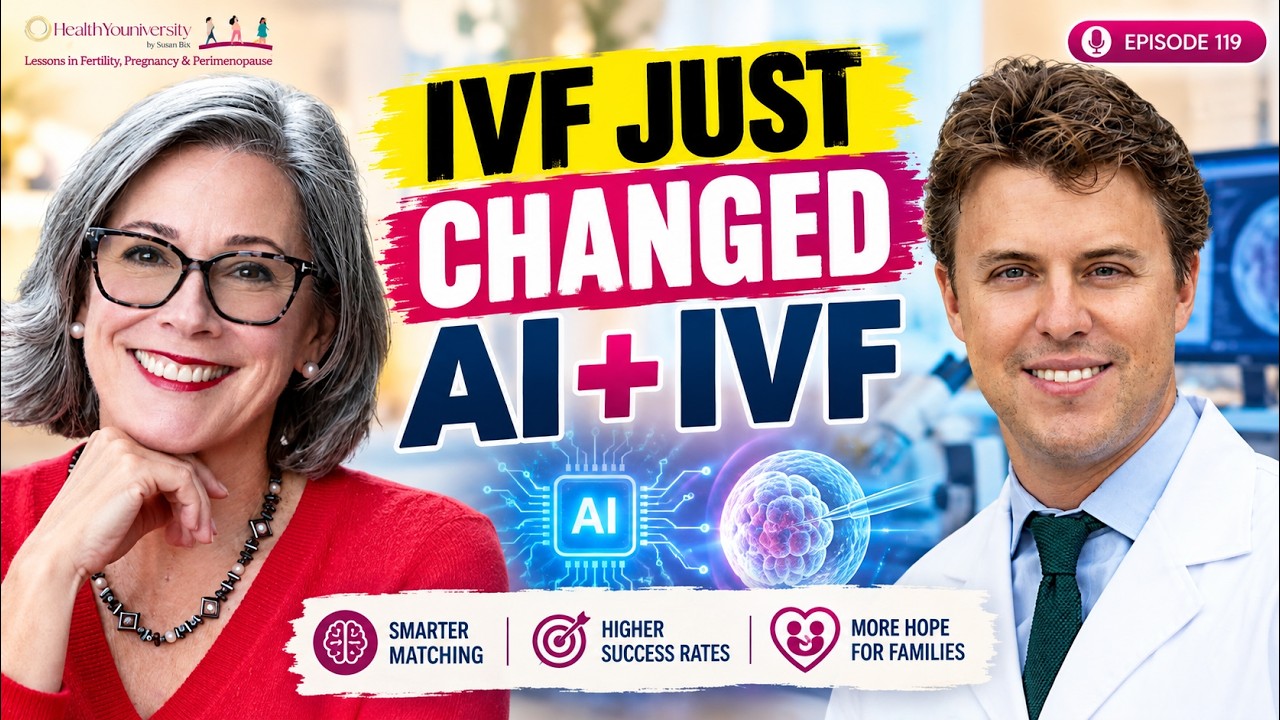
AI Embryo Selection: What It Could Mean for Your IVF Cycle
Key Takeaways
An AI score is one piece of information—not a verdict about your embryo.
AI may be most helpful when you have multiple embryos and your clinic needs to decide which one to transfer first.
PGT-A and AI embryo assessment are not interchangeable. One looks at chromosome information; the other evaluates patterns in embryo images.
Your embryologist and fertility physician still make the clinical decision. AI adds data but does not know everything about you, your embryos, or your treatment history.
Ask your clinic how they use AI before relying on the score. Understanding what the technology measures and what evidence supports it can help you participate more actively in your IVF decisions.
Is AI embryo selection better than PGT-A? They provide different information. PGT-A evaluates biopsied embryo cells for chromosome-number abnormalities, while AI embryo assessment analyzes images for visual patterns associated with outcomes. AI may provide additional information for embryo ranking, particularly when several embryos appear similar, but it should not be considered a substitute for genetic testing or expert embryology assessment.
If you have more than one embryo available for transfer, deciding which embryo should go first is an important part of IVF. For decades, we have relied on skilled embryologists to evaluate how embryos develop and grade them according to their appearance and stage of development. Today, artificial intelligence is beginning to give fertility teams additional information to consider.
I recently spoke with Dr. Eduardo Hariton, an OB-GYN and reproductive endocrinologist at Reproductive Science Center of the Bay Area, about EmbryoPredict, an AI-assisted technology being used to evaluate embryo images.
What interested me about this technology is its practical application. We are already collecting images of embryos and gathering tremendous amounts of information during an IVF cycle. AI gives us another way to analyze some of that information and potentially distinguish between embryos that otherwise appear quite similar.
How Do We Choose an Embryo Today?
Embryologists evaluate embryos according to how they develop in the laboratory. By the time an embryo reaches the blastocyst stage, they are looking at characteristics such as its development, expansion, and the appearance of the cells that will eventually become the baby and placenta.
This grading provides valuable information, but there is a human element to it. Two experienced embryologists may not grade an embryo in exactly the same way, particularly when comparing embryos that are relatively close in quality.
This is where AI becomes interesting.
EmbryoPredict analyzes images of embryos and compares them with patterns learned from thousands of previous embryo images and their outcomes. It then generates a score associated with the embryo's potential for a successful outcome.
The embryologist and physician still have the benefit of everything they know about the patient and the embryos. Age, medical history, embryo development, genetic testing, embryo grade, and the laboratory's own experience all remain part of the decision. The AI score gives the team another piece of information to consider when deciding which embryo to transfer first.
Where AI May Be Most Helpful
If you have only one embryo available for transfer, ranking your embryos obviously isn't the issue. If you have several embryos that look similar, the decision becomes more interesting.
In the randomized controlled trial Dr. Hariton discussed, more than 400 patients were assigned to embryo selection using traditional methods or traditional methods with AI assistance. The study found an overall improvement of approximately 5 percent with AI-assisted selection, with greater improvement seen in some groups, including older patients and those who had not used preimplantation genetic testing.
Those distinctions caught my attention.
As we age, there can be greater variability in the reproductive potential of our embryos. If you have several embryos and have chosen not to genetically test them, there may also be less information available to help determine which embryo should be transferred first.
This is precisely the kind of situation where additional information could be useful.
What About PGT?
Preimplantation genetic testing and AI embryo assessment provide different kinds of information.
PGT-A evaluates cells biopsied from an embryo to assess chromosome number. This becomes increasingly relevant with maternal age because the percentage of embryos with chromosome abnormalities increases as we get older.
EmbryoPredict analyzes the embryo's image. It looks for visual patterns associated with outcomes in the data on which the system was trained.
If embryos have undergone genetic testing, that information remains important. AI may then provide another way to evaluate or rank embryos being considered for transfer. For someone who has decided against PGT, AI image analysis may provide information that was not previously available from visual grading alone.
Understanding this distinction is important because AI image analysis is not a substitute for genetic testing. They are looking at different things.
There Are Limits to What AI Can Tell Us
One of the most interesting parts of my conversation with Dr. Hariton involved what is sometimes called the "black box" of artificial intelligence.
AI can evaluate an enormous number of pixels within an embryo image and identify patterns that would be extremely difficult for the human eye to recognize. The system can then associate those patterns with previous outcomes. What it cannot necessarily do is explain exactly which visual feature caused an embryo to receive a particular score.
That makes good research and validation essential. A compelling algorithm is only as useful as the data behind it and the clinical studies showing that it performs well with actual patients.
It also means that I would never want an AI score considered in isolation. An experienced fertility team has information about you and your IVF cycle that goes well beyond an image.
More Information Can Help Us Ask Better Questions
One of the things I have always believed about fertility care is that patients deserve to understand the decisions being made about their bodies and their embryos.
If you are going through IVF, ask your clinic how your embryos are graded and how the team determines which embryo to transfer first. If you are considering PGT, understand what that testing can and cannot tell you. If your clinic is using AI-assisted embryo assessment, ask how the score is incorporated into the final decision.
This is especially worth discussing if you have several embryos available and are trying to decide which one to transfer first.
AI is going to become a larger part of medicine, including reproductive medicine. I am interested in its potential because fertility care already produces an extraordinary amount of information, from hormone levels and ultrasound findings to embryo development and genetic testing. Finding better ways to use that information could help us make more informed decisions.
At Health Youniversity, I have always believed that technology and expert care work best when the patient remains an active participant. Understanding your options gives you a stronger foundation for conversations with your fertility team and for the decisions you make along the way.
My full conversation with Dr. Eduardo Hariton explores EmbryoPredict, embryo selection, genetic testing, egg and embryo freezing, and how new technology is finding its place within IVF.
Frequently Asked Questions - FAQs
What is AI embryo selection?
AI embryo selection uses machine-learning algorithms to analyze images of embryos and identify patterns associated with previous clinical outcomes.
The resulting information may help an IVF team decide which embryo to prioritize for transfer.
How are embryos traditionally selected for transfer?
Embryologists evaluate how embryos develop in the laboratory.
At the blastocyst stage, they assess characteristics such as development, expansion, and the appearance of different cell groups before assigning an embryo grade.
Why isn't embryo grading completely objective?
Embryo grading involves trained human interpretation.
Two experienced embryologists may not always assign exactly the same grade, especially when comparing embryos that are relatively similar.
How does AI analyze an embryo?
The technology discussed in the article evaluates pixels and visual patterns within embryo images and compares them with patterns learned from a large dataset of previous embryos and outcomes.
It then generates a score intended to help with embryo ranking.
Does AI decide which embryo gets transferred?
No.
The article describes AI as providing another piece of information for the embryologist and physician to consider alongside embryo development, grading, medical history, age, genetic testing, and other clinical factors.
When is AI embryo selection most useful?
It may be particularly relevant when a patient has multiple embryos available and several appear similar by traditional grading.
If only one embryo is available, ranking embryos is less relevant.
Can AI tell whether an embryo will definitely implant?
No.
An AI score is a prediction based on patterns in previous data. It cannot guarantee implantation, pregnancy, or live birth.
Does AI embryo selection improve IVF success?
The article reports a randomized trial of more than 400 patients that found an approximately 5% overall improvement with AI-assisted selection.
Before publishing the figure, specify which outcome improved, whether the figure was absolute or relative, and the study's exact patient population.
Does AI work better for older IVF patients?
The article reports that greater improvement was observed in some groups, including older patients.
That should be presented as a finding from the specific study discussed rather than a universal conclusion that AI works better for every older patient.
What is PGT-A?
PGT-A stands for preimplantation genetic testing for aneuploidy.
It involves biopsying cells from an embryo and evaluating chromosome number.
Is AI embryo assessment the same as PGT-A?
No.
AI analyzes embryo images. PGT-A analyzes genetic material from biopsied embryo cells.
They are evaluating different types of information.
Can AI replace PGT-A?
No.
The article explicitly distinguishes the two approaches and does not present image-based AI as a replacement for genetic testing.
Can AI be used if my embryos already had PGT-A?
Potentially.
If multiple embryos are being considered after genetic testing, AI-derived information may provide another input for ranking them, depending on the clinic and technology being used.
Can AI help if I decide not to do PGT-A?
The article suggests that AI image analysis may provide additional information when genetic testing is not available or has not been chosen.
That does not mean AI provides the same information as PGT-A.
Does AI know whether an embryo is chromosomally normal?
Image-based AI should not be assumed to determine chromosome status unless a specific validated technology has demonstrated that capability.
The system discussed here analyzes visual embryo images rather than directly testing chromosomes.
What is the “black box” problem in AI embryo selection?
A machine-learning model may identify complex visual patterns and produce a prediction without being able to explain exactly which feature or combination of features produced its score.
That is one reason validation and clinical oversight matter.
Can AI see embryo features an embryologist cannot?
AI can analyze large numbers of image pixels and combinations of patterns that may be difficult for a human observer to quantify.
Whether those patterns provide clinically meaningful additional information depends on how well the algorithm has been validated.
Is the highest AI score always the best embryo?
Not necessarily.
The AI score is one input. The physician and embryology team may also consider genetic-testing results, embryo grade, developmental history, clinical circumstances, and other information.
Does AI remove bias from embryo grading?
It may help standardize some image analysis, but algorithms have their own potential sources of bias.
Their performance depends heavily on the quality, size, diversity, and representativeness of the data used to train and validate them.
What should I ask my fertility clinic about AI embryo selection?
Useful questions include:
Do you use AI to evaluate or rank embryos?
Which technology do you use?
What outcome is the score designed to predict?
How was it clinically validated?
Does the score change which embryo you transfer first?
How does it interact with traditional grading?
How does it interact with PGT-A?
Is there an additional cost?
What happens if the AI recommendation differs from the embryologist's assessment?
Should patients have a role in embryo-selection decisions?
Patients do not need to interpret embryo images themselves, but they should understand how their clinic makes decisions.
Listen to my full conversation with Nora DeBora on Health Youniversity:
Prepare for IVF With Better Information—and a Whole-Body Plan
Embryo selection is one important part of IVF, but your treatment journey begins well before the transfer decision.
The Health Youniversity Preconception Plan supports whole-body preparation around Nutrition, Circulation, Lifestyle, and Emotional Support whether you are preparing for IVF, egg retrieval, embryo transfer, or trying to conceive naturally.
Explore the Preconception Plan →
If you're preparing for IVF and aren't sure what to ask about embryo grading, PGT-A, retrieval, transfer, or your overall treatment plan:
Schedule a Fertility Assessment Call →
About Eduardo Hariton
Eduardo Hariton is an Ob/Gyn and infertility specialist. He received his medical training at Harvard, where he completed a combined MD / MBA at Harvard Medical School and Harvard Business School and his Ob/Gyn residency at the Brigham and Women's Hospital and Massachusetts General Hospital. He completed his fellowship in Reproductive Endocrinology and Infertility at the University of California, San Francisco and practices clinically at the Reproductive Science Center of the Bay Area. He is the SVP of Clinical Growth and Innovation at US Fertility and the Managing Director of the USF Innovation Fund. He is also an advisor to several early-stage companies in the fertility space. He combines his clinical and business backgrounds to treat patients and think creatively about how to improve the care they receive when seeking fertility services.
Learn more about Reproductive Science Center of the Bay Area here: https://rscbayarea.com/
Meet Dr. Eduardo Hariton here: https://rscbayarea.com/doctors/hariton/
Follow RSC on Instagram: https://www.instagram.com/rscbayarea/
Follow RSC on LinkedIn: https://www.linkedin.com/company/reproductive-science-center-of-the-san-francisco-bay-area/
Medical Disclaimer:
By listening to the Health Youniversity podcast, you agree not to use this podcast as medical advice to treat any medical condition for yourself or others. Consult your healthcare provider for any medical issues you may have. This entire disclaimer also pertains to any guests or contributors to any Health Youniversity podcast.