PCOS, Blood Sugar Stability, and Fertility: Why Tracking Your Hormones and Glucose Matters
PCOS is often introduced as a reproductive diagnosis, but that only tells part of the story. For many women, polycystic ovarian syndrome first appears long before trying to conceive - through irregular periods, acne, excess hair growth, difficulty ovulating. Yet underlying these issues - often prescribed birth control pills to “fix” symptoms - is a metabolic and hormonal dysregulation.
PCOS is not an “ovary issue”. It is a pattern of blood sugar instability leading to insulin resistance, elevated androgens, inflammation, stress physiology, and disrupted communication between the brain, ovaries, liver, gut, and endocrine system. When we reduce PCOS to a period problem or fertility issue, we miss an opportunity to support the body more effectively.
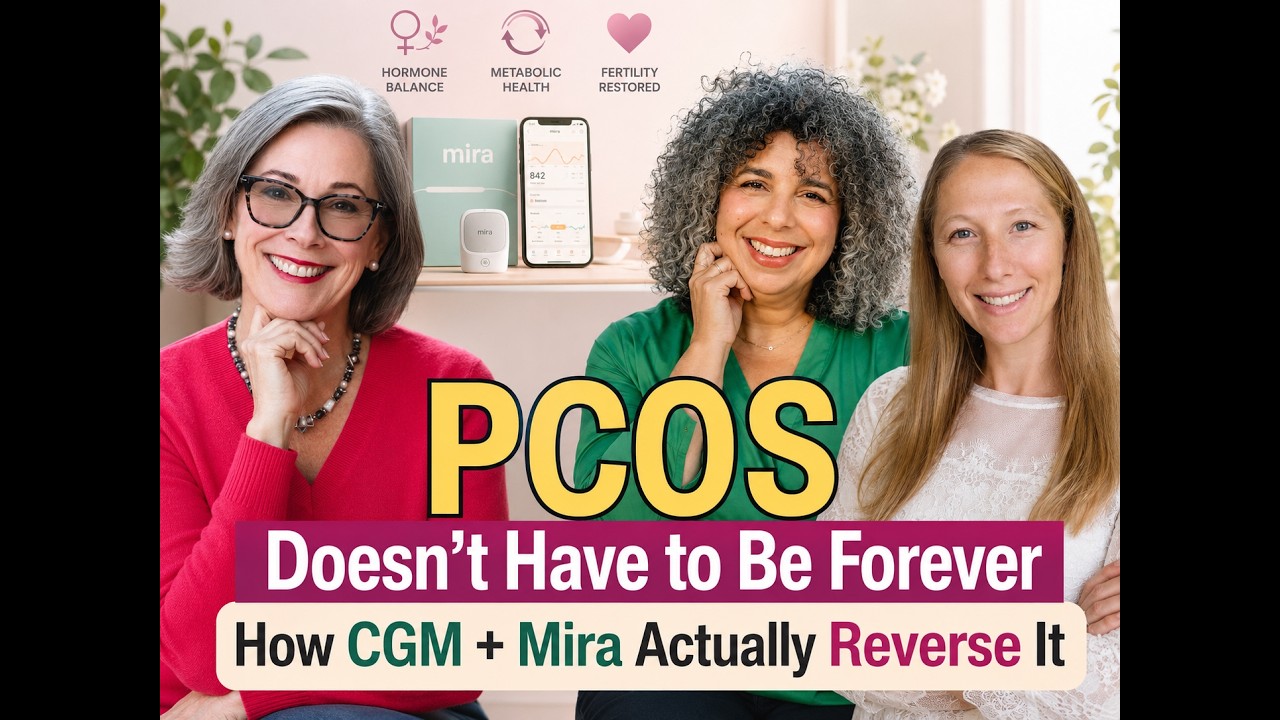
In this episode of Health Youniversity, the conversation explores how hormone tracking and continuous glucose monitoring (CGM) can help women with PCOS better understand what is happening inside their bodies. The goal is to provide agency to a person wanting to regulate cycles and know her conception window - not to chase data;
PCOS Is More Than a Period Problem
Although PCOS often affects ovulation and menstrual regularity, the root pattern is metabolic. This is why women with PCOS may also experience changes in skin, mood, sleep, weight, and blood sugar regulation.
PCOS exists on a spectrum. Some women have the classic signs: irregular cycles, elevated testosterone, acne, hair growth, insulin resistance, and polycystic-appearing ovaries. Others may have subtler patterns. They may bleed regularly but not ovulate consistently, or they may have normal-looking ovaries while still experiencing hormonal imbalance.
This is why PCOS can feel confusing — and why many women feel dismissed before they receive meaningful support. PCOS care should not focus only on getting pregnant. Fertility matters, but whole-body health matters more.
Why Blood Sugar Stability Matters
Insulin resistance is one of the most common drivers of PCOS. In the presence of excess glucose, the pancreas produces more insulin. Higher insulin can stimulate the ovaries and adrenal glands to produce more androgens, including testosterone.
Elevated androgens interfere with follicle development and ovulation. When ovulation becomes irregular or absent, cycles become unpredictable, progesterone production is reduced, and fertility becomes more challenging.
Therefore, stablizing blood sugar supports healthier insulin signaling, which supports healthier androgen balance, which supports more regular ovulation.
Hormones and Glucose Change Across the Cycle
Blood sugar does not behave the same way every day of the menstrual cycle. In the first half of the cycle, estrogen tends to be more dominant. After ovulation, progesterone rises. These hormonal shifts can influence insulin sensitivity and glucose response.
For women with PCOS, those changes may be more noticeable. Some may see higher glucose patterns in the luteal phase. Others may notice that certain meals cause stronger spikes depending on where they are in the cycle. Some may have elevated fasting glucose while their post-meal numbers appear normal.
Tracking can help bring these patterns into view. The numbers are meant to provide useful information, not to induce anxiety.
The Role of Hormone Tracking
Hormone tracking is especially useful for women with PCOS, because menstruation does not always mean ovulation has occurred. A woman may have a period-like bleed without a true ovulatory cycle, or she may experience multiple attempts at ovulation before the body succeeds.
At-home hormone tracking may help clarify whether estrogen is rising, whether luteinizing hormone is triggered, and whether progesterone rises adequately after ovulation. For women with PCOS, this can be validating because it shows whether the body is trying to ovulate, whether ovulation is delayed, or whether an intervention is helping.
Progress may not always look dramatic. A 70-day cycle becoming a 55-day cycle may still be long, but it can represent meaningful improvement.
Continuous Glucose Monitoring as a Tool for Insight
A continuous glucose monitor, or CGM, offers another layer of understanding. It can show how glucose responds throughout the day and night — after meals, during sleep, after exercise, during stress, and across different phases of the cycle.
For many women, even six to eight weeks of CGM data can provide useful insight. It may show whether breakfast needs more protein, whether sleep affects morning glucose, whether stress spikes blood sugar, or whether glucose patterns shift before a period. To optimize its use, consider using the device during the week prior to and the week after ovulation to notice what, if anything, is different in these hormonal states.
Data Should Build Agency, Not Anxiety
For some, ttracking can become overwhelming, especially during fertility treatment. Every number can start to feel like a verdict.
That is not the purpose of hormone tracking or glucose monitoring.
The purpose is to build agency. When used thoughtfully, data can replace guesswork with information. It can help women have better conversations with their providers and make changes that are specific to their physiology.
Why Personalized PCOS Care Matters
PCOS care is not one-size-fits-all. One woman may need support with insulin resistance. Another may need help restoring ovulation after coming off birth control. Another may be postpartum and trying to understand her cycle patterns. Another may be preparing for IVF and wanting to optimize before treatment.
The better question is not, “What is the PCOS protocol?” but instead “What is this person’s body showing us, and what support does she need now?”
PCOS, Fertility, and Pregnancy Preparation
For women trying to conceive, PCOS care is especially important because ovulation is central to fertility. If ovulation is irregular or absent, timing intercourse or preparing for treatment becomes more difficult. If blood sugar is unstable, insulin and androgen patterns may continue to disrupt the reproductive system.
But preconception care is not only about achieving a positive pregnancy test. It is about preparing the body for pregnancy. Blood sugar stability, inflammation, and metabolic health all help shape the environment in which a baby develops.
Importantly, know that you are not your PCOS diagnosis. It is a pattern your body is expressing, and patterns can change when we understand what is driving them and make interventions to rebalance..
Hormone tracking and glucose monitoring do not replace clinical care; they are tools that can help women listen more clearly to the body.
At Health Youniversity, we believe fertility care should support the whole person — not just the ovaries, not just the labs, and not just the pregnancy outcome. When women have access to meaningful information and compassionate interpretation, they become active participants in their own care.
And that is where true agency begins.
Check out all of our episodes on the following platforms:
As the Clinical Manager at Mira, Rose assists healthcare professionals and providers to successfully use Mira with their patients. With over 10 years of experience as a natural family planning, Rose has extensive experience assisting women using the Mira monitor for hormone monitoring and health promotion including women tracking their hormones in regular cycles, irregular cycles, postpartum amenorrhea, chemo-induced menopause, and perimenopause.
Mira is a medical device quality hormone 4 hormone tracker that fluorescent technology to achieve sensitive changes to hormone fluctuation.
Dr. Basma Faris is a Board-Certified Obstetrician and Gynecologist and Certified Culinary Medicine Specialist.
Dr. Faris began her career in healthcare as a Registered Dietitian, a published researcher on the impact of lifestyle intervention on pregnancy outcomes in obese pregnant women. She developed a 7 day online patient course: Adopt a Mediterranean Diet for PCOS with Dr. Faris.
She is the founder of PollyPrep and PollyPrep MD, both aimed at educating and treating people with PCOS using an evidence-based mix of Culinary Medicine and Gynecology.
Dr. Faris was named a New York Superdoctor Rising Star in 2022 and 2023.
Website: drbasmafaris.com
Ready to start understanding your hormones in real time? Use code 2DRFOX for 20% off your Mira supplies and begin tracking your hormone patterns from home. Shop here.
Medical Disclaimer:
By listening to the Health Youniversity podcast, you agree not to use this podcast as medical advice to treat any medical condition for yourself or others. Consult your healthcare provider for any medical issues you may have. This entire disclaimer also pertains to any guests or contributors to any Health Youniversity podcast.