
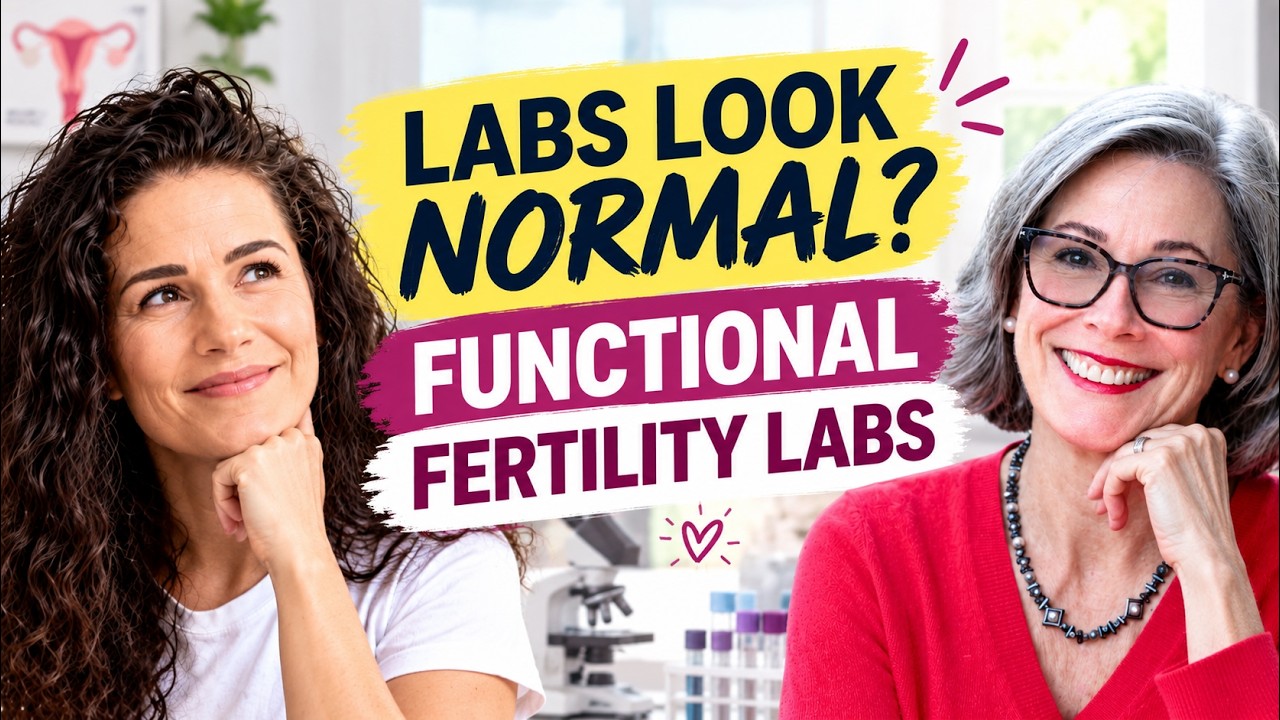
When Your Fertility Tests Are Normal, What Else Should You Look At?
Key Takeaways
“Everything looks normal” does not mean your questions are over. It may mean the next step is looking more closely at your history, symptoms, cycle patterns, digestion, metabolism, infections, or previous fertility treatment.
You probably do not need every fertility or functional test available. Start with the areas that stand out in your individual history.
More supplements are not automatically better. Testing can sometimes help identify what you actually need instead of expanding an already crowded supplement cabinet.
Your reproductive health exists within your whole health. Sleep, nutrition, blood sugar, digestion, circulation, inflammation, stress physiology, and nutrient status may all deserve attention when clinically relevant.
Preconception care can happen alongside fertility treatment. Improving whole-body health and moving forward with egg retrieval, embryo banking, or another recommended treatment do not always have to happen one after the other.
If your fertility tests are normal, you do not necessarily need a long list of functional tests. A better next step is to review menstrual patterns, ovulation, digestive symptoms, recurrent infections, pregnancy losses, previous treatment, metabolic health, sleep, and nutrition to identify whether one or two areas deserve deeper investigation. Tests such as hormone-metabolite, stool, vaginal microbiome, nutrient, or metabolic testing may be useful in selected cases, but they are not automatically appropriate for everyone.
Over the years, I have had many patients come into my office with a folder full of fertility test results and the same frustrating story. Their FSH is normal, their tubes are open, their partner's semen analysis looks fine, and perhaps even their AMH is within the expected range for their age. They have been reassured that everything looks normal, yet they still aren't pregnant.
The usual fertility evaluation gives us important information. We need to know whether you are ovulating, whether your fallopian tubes are open, what your ovarian reserve looks like, whether there are fibroids or polyps, and whether sperm count, movement and morphology are within expected ranges. I wouldn't want to pursue fertility treatment without that information. But there are times when the results don't fully explain what is happening, because fertility is influenced by much more than the reproductive organs and a handful of hormone values.
The ovaries, uterus and hormones are functioning within the same body as your digestive system, metabolism, immune system and microbiome. They are affected by the nutrients available to you, your blood sugar regulation, sleep, circulation, inflammation and stress physiology. This is why I was interested in talking with Nora DeBora, a functional fertility coach, holistic nutritionist and fertility awareness practitioner, about when additional testing may be useful and, equally important, when it may not be necessary.
When Does More Testing Make Sense?
There are now tests available for almost every aspect of our physiology. We can measure hormone metabolites, cortisol patterns, nutrients, organic acids, stool bacteria and vaginal microorganisms, along with increasingly sophisticated metabolic and inflammatory markers. Having access to all of this information doesn't mean everyone needs all of it.
I prefer to begin with what we already know about the person. Menstrual cycles, ovulation patterns, digestive symptoms, recurrent infections, sleep, blood sugar, menstrual pain, pregnancy losses and previous fertility treatments can help determine whether there is an area that deserves more investigation. Someone with chronic digestive symptoms may benefit from a very different evaluation than someone with irregular cycles or recurrent bacterial vaginosis.
Nora and I discussed the DUTCH test as one example. This dried urine test measures hormone metabolites, which gives us different information from a blood test. Bloodwork measures circulating hormone levels at the time the sample is taken, while urine metabolites can provide information about how certain hormones are being processed. That may be useful when there is a reason to investigate hormone metabolism, but I wouldn't automatically recommend it to every person trying to conceive. Before ordering a test, I want to know what we hope to learn and whether the result is likely to change the plan.
The Fertility Supplement Cabinet
Most fertility patients I meet are already taking supplements, and many are taking quite a few. CoQ10, prenatal vitamins, vitamin D, omega-3s, NAC, inositol, DHEA, melatonin and various herbs frequently find their way into a daily routine. Recommendations come from practitioners, friends, fertility groups, podcasts and late-night internet searches, and it doesn't take long for the list to become extensive.
I understand the desire to cover every possible base, especially when so much about fertility feels outside of your control. I am more interested in knowing why you are taking something and whether it makes sense for you. If vitamin D is low, we can address vitamin D. If blood sugar regulation needs attention, that deserves its own plan. If there are signs of poor digestion or absorption, adding more supplements may accomplish very little until we understand what is happening in the gut.
Functional testing can sometimes help us become more specific about those decisions. Its value isn't in generating a longer supplement list. Its value is in helping us decide where attention is most likely to make a difference.
What Does Your Gut Have to Do With Fertility?
When I began working in fertility nearly 25 years ago, the microbiome was not part of the everyday fertility conversation. We now know considerably more about the communities of bacteria and other microorganisms that live in the digestive and reproductive tracts and the ways they interact with digestion, nutrient absorption, immune function and inflammation.
The gut microbiome is particularly important because of its relationship with the immune system. When the balance of organisms changes significantly, or dysbiosis develops, the effects can extend beyond digestive symptoms. This is one reason I pay attention when a fertility patient also tells me about chronic bloating, constipation, diarrhea, food sensitivities or a long history of digestive problems.
There are also women who don't have obvious digestive symptoms but have dealt with recurrent bacterial vaginosis, yeast infections or UTIs for years. They are treated, feel better for a while, and then the problem returns. After several rounds of the same cycle, it makes sense to look more closely at why the infection keeps recurring and what the microbial environment looks like between episodes.
The Reproductive Tract Has a Microbiome Too
The vaginal microbiome normally contains protective bacteria, particularly Lactobacillus species, which help maintain the environment and discourage the overgrowth of potentially harmful organisms. When that balance is disrupted, some women become more susceptible to BV, yeast infections and other recurrent symptoms.
Nora and I also discussed testing of the vaginal and uterine microbiomes. These tests are not routinely necessary for everyone trying to conceive, but they may be worth discussing in the presence of recurrent infections, suspected endometritis, repeated implantation failure or unexplained pregnancy loss. Some tests provide information about both potentially problematic organisms and the protective bacteria that are present, which can be useful when deciding how to restore the microbial environment after treatment.
Biofilms add another layer to this discussion. Some microorganisms can form a protective matrix that makes them more difficult to treat, which may contribute to an infection improving temporarily and then returning. In certain cases, the partner may also need to be considered, particularly when there is concern that an organism is being passed back and forth. Treating the same person repeatedly without considering these other factors can keep the cycle going.
Your Eggs Are Developing Within Your Health
One of the concepts I have taught fertility patients throughout my career is that the egg you hope will become your future baby has been developing for months before ovulation. During that time, the follicle and egg are dependent upon nutrients, circulation, cellular energy production and the metabolic environment of the body in which they are growing. Sperm also require months to develop, which is why preconception health belongs to both partners.
This is the reason I encourage people to think about pregnancy preparation well before the cycle in which they hope to conceive. Nutrition, blood sugar regulation, sleep, movement, circulation, stress resilience and reducing unnecessary inflammatory burden are areas where we may have some ability to influence the environment in which eggs and sperm are developing.
Of course, improving health cannot guarantee a pregnancy or a healthy embryo. Age, genetics, reproductive anatomy and many other factors remain important. Preconception care gives us an opportunity to work with the areas that can reasonably be influenced while appropriate fertility evaluation and treatment continue.
Putting AMH in Perspective
AMH is one of the fertility numbers that creates the most anxiety, and I regularly meet women who have interpreted a low result as a statement about their ability to become pregnant. AMH is useful because it provides information about ovarian reserve and helps reproductive endocrinologists estimate how someone may respond to ovarian stimulation. It does not directly measure egg quality.
A low AMH deserves attention, particularly when age and reproductive timing are concerns, but it should be interpreted alongside antral follicle count, menstrual history, age, previous response to fertility treatment and the rest of the clinical picture. I also want to pay attention to the health of the person whose remaining follicles are developing.
For women in their late 30s and early 40s, this sometimes means working on preconception health while moving forward with fertility treatment. Egg retrieval or embryo banking and improvements in nutrition, sleep, metabolic health, digestion and circulation do not always have to happen sequentially. Depending on the individual situation, they can happen alongside one another, with the fertility team helping to determine the appropriate timing.
Testing Should Help You Make Decisions
The number of tests available in fertility and functional medicine can quickly become overwhelming. Bloodwork, DUTCH testing, stool analysis, vaginal microbiome testing, endometrial testing, metabolic markers and nutrient testing may all have a place, but their usefulness depends upon the person sitting in front of us.
I would rather begin with a thorough history and identify the areas that stand out. Recurrent BV may lead us in one direction, while long irregular cycles and signs of insulin resistance lead us in another. Chronic digestive problems suggest another place to investigate, and recurrent pregnancy loss or failed embryo transfers may require an entirely different evaluation.
This is also why I don't see conventional and functional medicine as competing approaches to fertility. Conventional reproductive medicine gives us information and treatments we cannot replace. Functional testing can sometimes add another layer when there is a specific reason to look further. Acupuncture and Traditional Chinese Medicine bring another perspective, particularly around patterns of function, circulation and the changes that occur throughout the menstrual cycle. Nutrition and lifestyle are part of the same conversation.
After nearly 25 years of working with fertility patients, I don't believe one practitioner, one laboratory test or one model of medicine has all of the answers. I want the information that helps us understand the individual person and make better decisions about what comes next.
Preparing for the Pregnancy You Want
When someone comes to me for fertility care, getting pregnant is obviously the immediate goal. But my concern extends beyond the positive pregnancy test. We are preparing for a pregnancy, a placenta, a developing baby and the enormous physiological work the body will be asked to do over the months that follow.
That is why preconception health matters so much to me. If there is time to improve nutritional status, stabilize blood sugar, address digestive or microbiome problems, improve sleep, support circulation and investigate symptoms that have been ignored, I want to use that time well.
If your fertility evaluation has come back normal and you are still having difficulty conceiving, you may not need a long list of functional tests. Your history may point toward one or two areas that are worth investigating further. The useful question is what information is missing from your particular fertility picture and whether finding it could change what you do next.
Fertility care is personal. The testing and treatment should be personal too.
Frequently Asked Questions - FAQs
What does it mean when fertility tests are normal but I am not getting pregnant?
It means standard testing has not yet identified an obvious fertility barrier.
That does not automatically mean something has been missed, but your history, symptoms, cycle patterns, treatment history, and partner factors may help determine whether additional investigation is appropriate.
What are the standard fertility tests?
The article discusses evaluation of:
Ovulation
Fallopian-tube patency
Ovarian reserve
Fibroids or polyps
Sperm count
Sperm movement
Sperm morphology
These provide an important foundation before moving into more specialized testing.
Is this the same as unexplained infertility?
It may be.
Unexplained infertility generally describes difficulty conceiving when the standard fertility evaluation has not identified a clear cause.
Should everyone with unexplained infertility get functional testing?
No.
The article strongly favors symptom- and history-directed testing rather than ordering every available functional test.
When does additional fertility testing make sense?
It may be worth discussing when there are clues such as:
Chronic digestive symptoms
Recurrent bacterial vaginosis or yeast infections
Irregular menstrual cycles
Possible blood sugar concerns
Recurrent pregnancy loss
Repeated implantation failure
Unusual menstrual pain
Previous fertility-treatment failures
What is a DUTCH test?
DUTCH testing is dried urine testing that can measure hormone metabolites.
The article explains that it provides different information from a standard blood hormone test but does not recommend it universally for people trying to conceive.
Is DUTCH testing better than blood testing?
Not necessarily.
They provide different types of information. Bloodwork measures circulating hormones at the time the sample is collected, while urine testing may provide information about hormone metabolism.
The appropriate test depends on the question being investigated.
Do I need stool testing for fertility?
Not routinely.
The article suggests that stool or other gastrointestinal testing may be more relevant when there are persistent digestive symptoms or another specific reason to investigate gut health.
Can gut health affect fertility?
The article discusses relationships among the gut microbiome, digestion, nutrient absorption, immune function, and inflammation.
Persistent digestive symptoms should therefore not automatically be dismissed in someone undergoing fertility evaluation.
What symptoms might suggest gut health deserves attention?
The article specifically mentions:
Bloating
Constipation
Diarrhea
Food sensitivities
Long-term digestive problems
These symptoms can have many causes, so appropriate medical evaluation remains important.
What is the vaginal microbiome?
The vaginal microbiome is the community of microorganisms living in the vaginal environment.
The article highlights protective Lactobacillus species and discusses how microbial imbalance may be relevant to recurrent BV, yeast infections, or other symptoms.
Should everyone trying to conceive test their vaginal microbiome?
No.
The article says this testing is not routinely necessary for everyone.
It may be worth discussing in selected situations such as recurrent infections, suspected endometritis, implantation failure, or unexplained pregnancy loss.
What are biofilms?
Biofilms are protective structures that some microorganisms can form.
The article discusses them as one possible reason why an infection may improve temporarily and then recur.
Can a partner contribute to recurrent infections?
Potentially, depending on the organism and situation.
The article notes that partners may sometimes deserve consideration when clinicians suspect organisms are repeatedly being passed back and forth.
Do fertility supplements help everyone?
No.
The article specifically challenges the idea that more supplements automatically produce better fertility support.
The reason for taking a supplement, dosage, laboratory findings, diet, medical history, medications, and fertility treatment should all be considered.
What fertility supplements does the article mention?
It lists common examples such as:
Prenatal vitamins
CoQ10
Vitamin D
Omega-3s
NAC
Inositol
DHEA
Melatonin
Herbs
Their inclusion in the article is not a recommendation that everyone should take them.
Does AMH measure egg quality?
No.
AMH provides information primarily about ovarian reserve and may help fertility specialists estimate ovarian response to stimulation. It does not directly measure egg quality.
Does low AMH mean I cannot become pregnant?
No.
The article emphasizes that AMH should be interpreted alongside age, antral follicle count, menstrual history, treatment response, and the rest of the clinical picture.
Can I improve my health while going through IVF?
Yes, according to the article's framework.
For some people—particularly when age or timing matters—egg retrieval or embryo banking and improvements in nutrition, sleep, digestion, metabolic health, and circulation may happen concurrently rather than sequentially.
Do eggs really develop for months before ovulation?
The article explains that the egg and follicle that ultimately reach ovulation have been developing for months.
It uses this concept to support thinking about preconception health before the cycle in which pregnancy is attempted.
Does sperm health also require preparation?
Yes.
The article specifically notes that sperm also develop over a period of months, which is why preconception preparation should include both partners when sperm is part of the conception plan.
Can preconception care guarantee pregnancy?
No.
The article explicitly acknowledges that improving health cannot guarantee pregnancy or a healthy embryo.
Age, genetics, anatomy, and many other reproductive factors remain important.
How do I know if another test is worth doing?
Ask:
What are we hoping to learn from this test, and would the result change what we do next?
Listen to my full conversation with Nora DeBora on Health Youniversity:
Find the Missing Pieces in Your Fertility Picture
You may not need every fertility test, supplement, or protocol available. What you need is a clearer understanding of which areas are most relevant to your body, your history, and your next fertility step.
The Health Youniversity Preconception Plan helps you build a whole-body foundation around Nutrition, Circulation, Lifestyle, and Emotional Support while preparing for natural conception or fertility treatment.
Explore the Preconception Plan →
For more personalized guidance, consider a Fertility Assessment Call to review your history, symptoms, testing, and next questions.
Schedule a Fertility Assessment Call →
About Nora DeBora
Nora DeBora is a Functional Fertility Coach, Holistic Nutritionist, Fertility Awareness Practitioner and host of The Ultimate Pregnancy Prep Podcast. She works with women and couples preparing for pregnancy through individualized fertility coaching, nutrition and targeted protocols.
Register for the free Root Cause Fertility Summit
Medical Disclaimer:
By listening to the Health Youniversity podcast, you agree not to use this podcast as medical advice to treat any medical condition for yourself or others. Consult your healthcare provider for any medical issues you may have. This entire disclaimer also pertains to any guests or contributors to any Health Youniversity podcast.